- Blogs
- Company Formation
- How to Start a Business in the UAE (2026): Steps, Costs & Structure
Aug 10, 2026
How to Start a Business in the UAE (2026): Steps, Costs & Structure
Share this article
- Why founders choose the UAE
- Can foreigners own 100% of a UAE company?
- Mainland or free zone: the short version
- The six steps to register a company in the UAE
- How long does UAE company formation take?
- What does it cost to start a business in the UAE?
- Opening a UAE business bank account
- Corporate tax and VAT: what actually applies
- Five mistakes that cost founders the most -
- Which businesses are worth starting in the UAE in 2026?
- Frequently Asked Questions About How to Start A Business In UAE
- Getting started
How to Start a Business in UAE
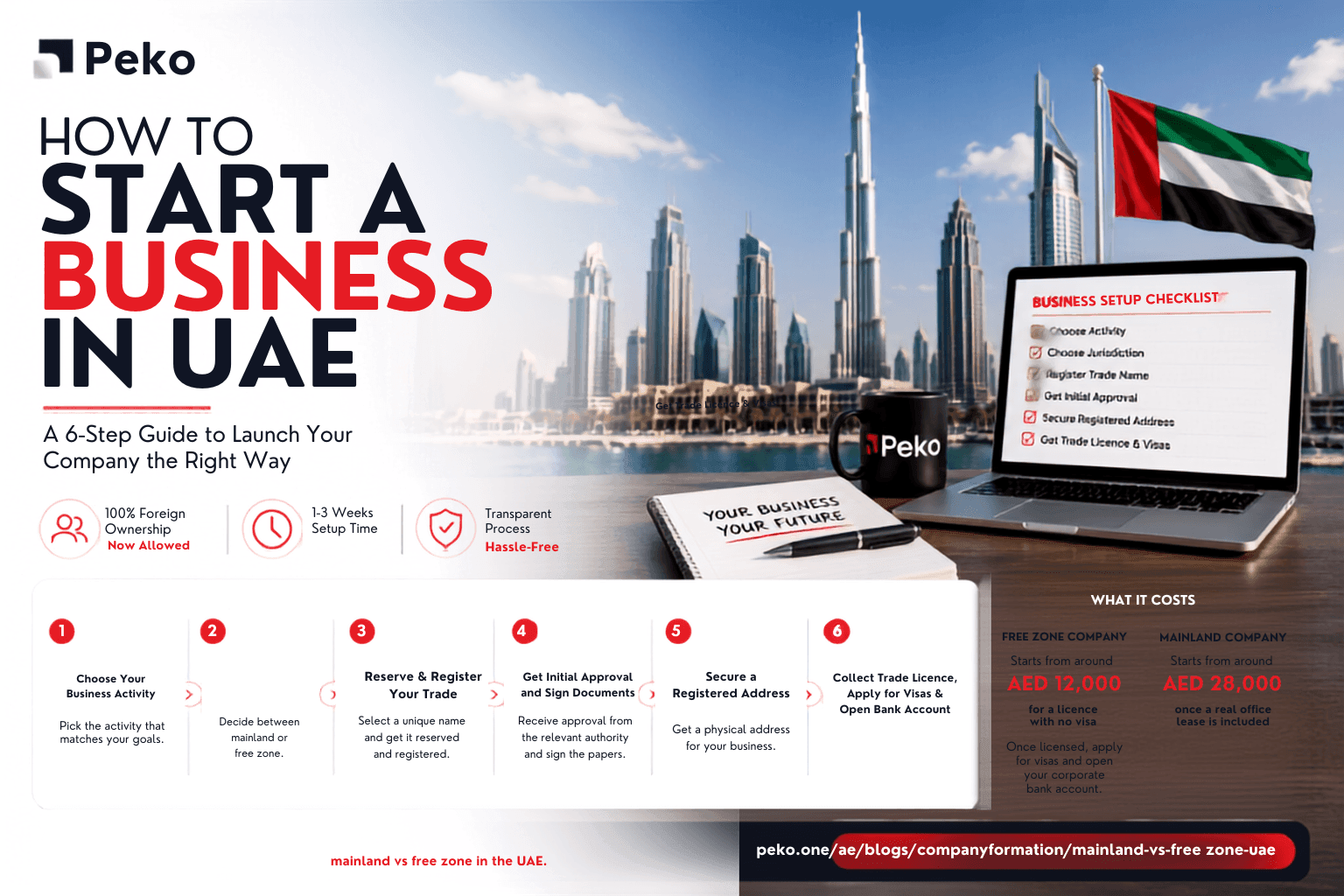
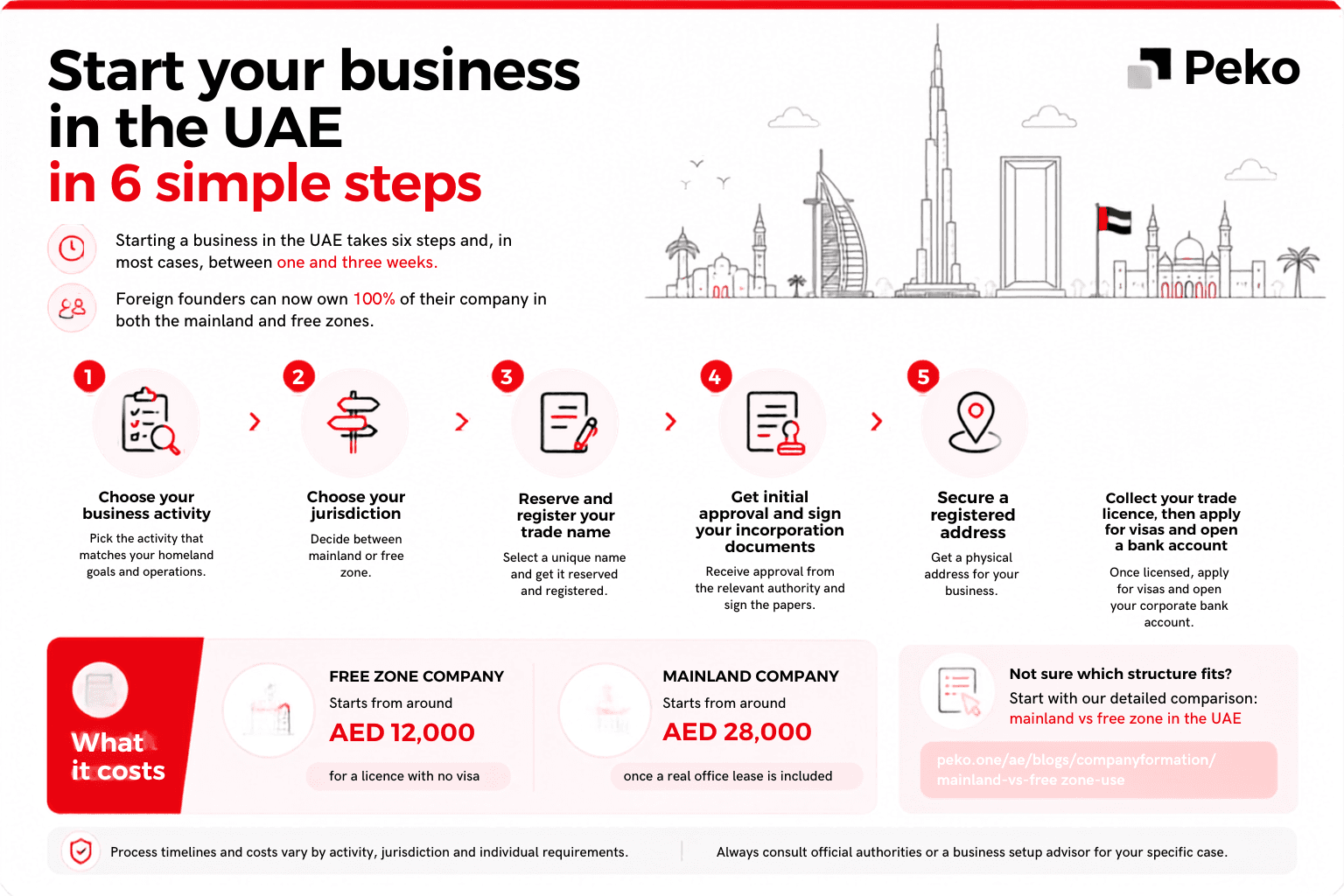
TL;DR: Starting a business in the UAE takes six steps and, in most cases, between one and three weeks. Foreign founders can now own 100% of their company in both the mainland and free zones.
What it costs: a free zone company starts from around AED 12,000 for a licence with no visa. A mainland company starts from around AED 28,000 once a real office lease is included. Full breakdown below.
Not sure which structure fits? Start with our detailed comparison: mainland vs free zone in the UAE. |
Why founders choose the UAE
The UAE has spent a decade making itself easy to incorporate in, and it shows. There is no personal income tax, foreign ownership restrictions have largely been removed, and the country sits inside a four-hour flight of roughly a third of the world's population.
What has changed recently is that the UAE is no longer a zero-tax jurisdiction for companies. Corporate tax and VAT both apply, which means the administrative side of running a UAE business now matters as much as the setup itself. That shift is worth understanding before you choose a structure, not after.
Can foreigners own 100% of a UAE company?
Yes. Under the amended Commercial Companies Law, foreign investors can own 100% of their company in the UAE mainland as well as in free zones.
Historically, a foreign national setting up a commercial mainland business needed a local Emirati partner holding 51% of the shares. That requirement was removed across thousands of commercial and industrial activities. A small number of strategic-impact activities still carry ownership or approval conditions, so confirm your specific activity code before you assume full ownership applies.
Mainland or free zone: the short version
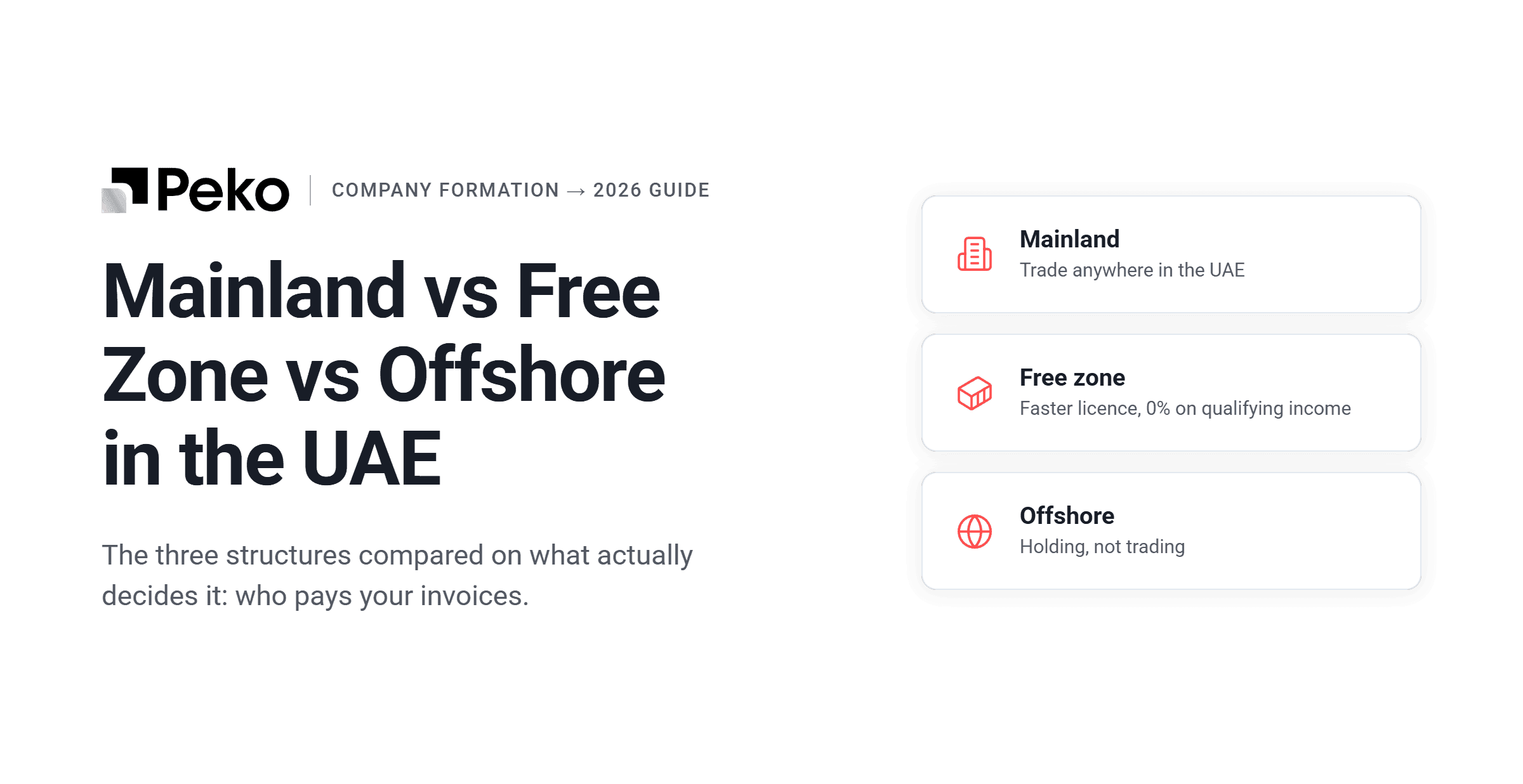
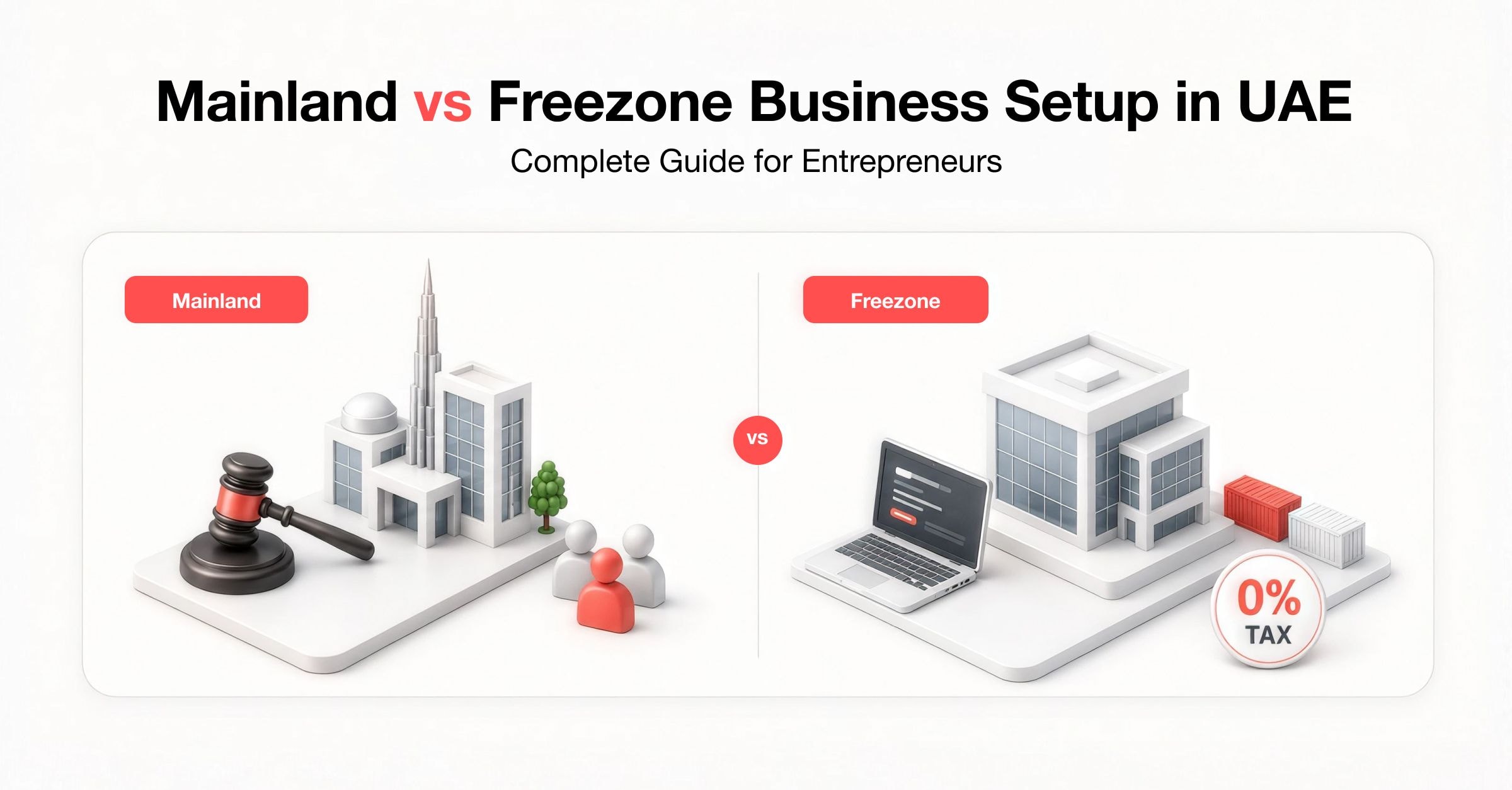
This is the decision that shapes everything else - who you can sell to, where you can put an office, and what you'll pay each year.
- Mainland companies are licensed by the emirate's Department of Economic Development. No trading restrictions: you can sell directly to the UAE market, open retail premises anywhere, and bid for government contracts. Best for retail, F&B, construction, brokerage, and B2B firms selling to local UAE companies.
- Free zone companies are licensed by an independent free zone authority. Faster to set up, cheaper to run, full profit repatriation, but you cannot sell directly into the local UAE market without going through a licensed mainland distributor or opening a mainland branch. Best for software, international e-commerce, consultancies, and holding companies.
That is the summary. The decision has more moving parts than most guides admit; visa quotas, banking treatment, corporate tax position and the cost of switching later.
Read the full comparison: Mainland vs Free Zone in the UAE - The Complete 2026 guide
The six steps to register a company in the UAE
Step 1: Choose your business activity
You cannot incorporate without selecting an official activity from the approved list. Your activity determines your licence type - commercial, professional or industrial and whether your chosen jurisdiction will accept you at all.
Get this right the first time. The most common expensive mistake in UAE setup is picking a vague or overly broad activity code to save time. Banks read that code during on-boarding, and if it doesn't clearly describe what you actually do, your corporate account application stalls or gets declined.
Step 2: Choose your jurisdiction
See the section above. In practice: if your customers are UAE businesses or UAE consumers buying in person, you likely need mainland. If your customers are abroad or you sell online, free zone is usually cheaper and faster.
Step 3: Reserve your trade name
UAE naming rules are stricter than most founders expect. The name must reflect your activity, cannot include religious references, offensive language or government body names, and if you name the company after a person it must be that person's full legal name, no nicknames or initials. Submit it to the DED or your free zone authority for approval before doing anything else.
Step 4: Initial approval and incorporation documents
Initial approval is the government confirming it has no objection to you running your specific business. Once you have it, you sign your incorporation documents, a Memorandum of Association for a mainland LLC, or the free zone authority's standard incorporation pack. Some professional mainland licences use a Local Service Agent agreement instead of an MoA.
Step 5: Secure a registered address
Every UAE company needs a registered address.
- Mainland: a physical commercial lease, registered through the Ejari system. This is usually the single largest line in a mainland budget.
- Free zone: most zones offer flexi-desks or shared workspace inside the zone, which is why free zone setup is cheaper. Your visa quota is tied to the space you take, so a flexi-desk typically caps you at one to three visas.
Step 6: Trade licence, visas and banking
Once your documents are approved, the authority issues your trade licence. From there you apply for your establishment card, which unlocks residency visas for you, your family and your staff. Each visa requires a medical fitness test and bio-metrics before the Emirates ID is issued.
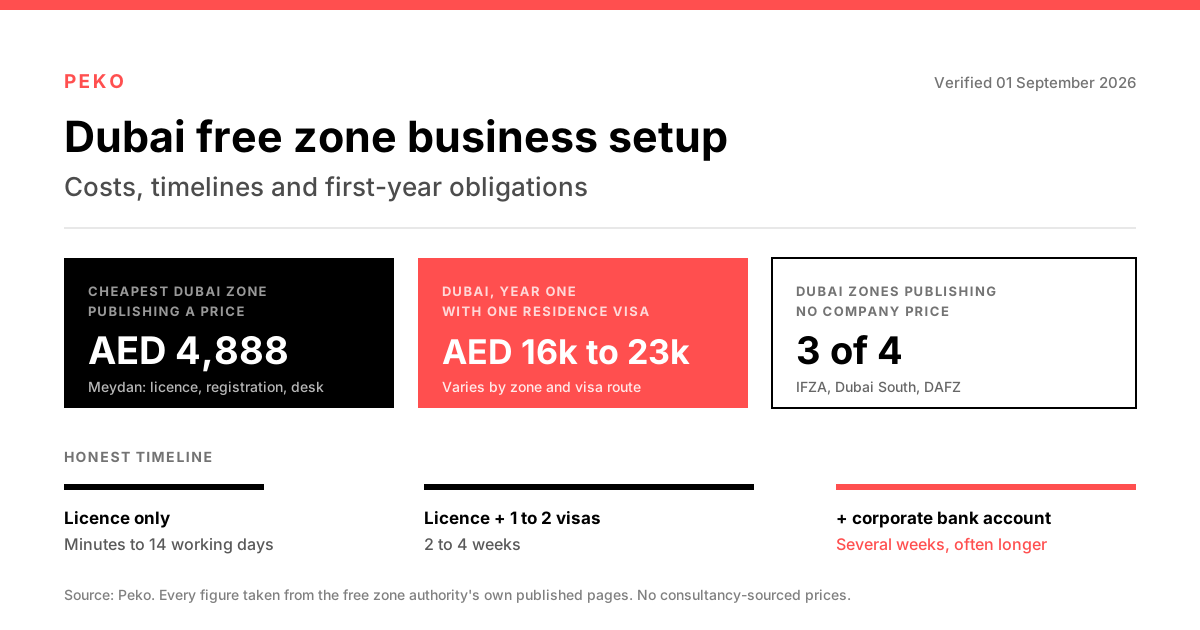
Setting up specifically in Dubai? The emirate has its own DED process, fee schedule and approval quirks, we've covered them step by step in our company formation in Dubai guide.
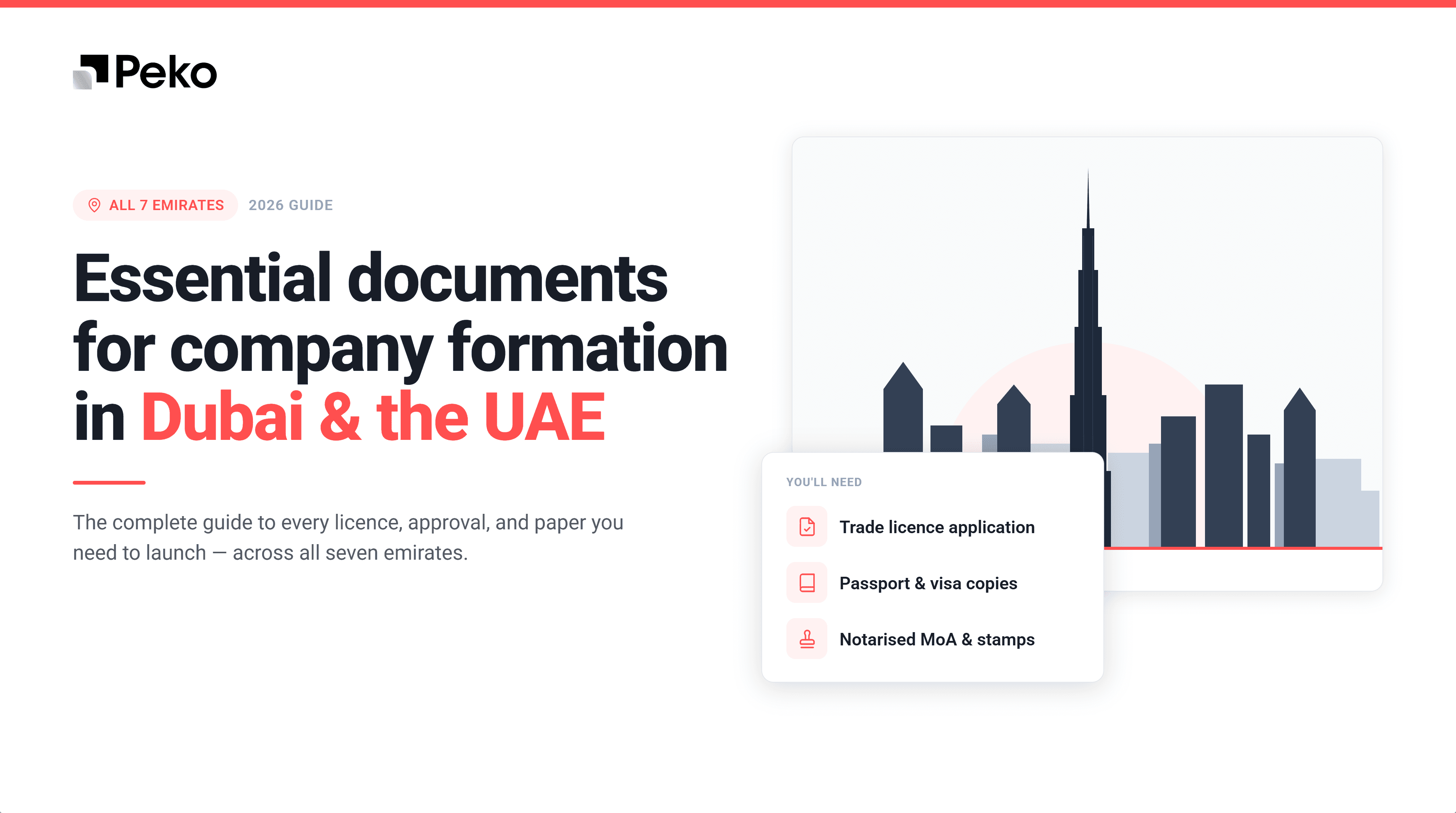
Preparing paperwork? Here's the full documents checklist for UAE company formation.
How long does UAE company formation take?
- Free zone: typically 3 to 7 working days. Free zones are single-window authorities and most of the process is digital.
- Mainland: typically 5 to 14 working days, because approvals cross departments and the MoA needs notarising.
Add one to three weeks on top for visa processing, and two to six weeks for a corporate bank account, banking is almost always the longest pole in the tent.
What does it cost to start a business in the UAE?
Costs split sharply by jurisdiction, so a single number is misleading. Here is what each route actually looks like in the first year.
Free zone: from AED 12,000
Realistic first year: from AED 12,000 with no visa; AED 18,000 – 40,000 for a single-founder company with one residency visa, depending on the zone and package.
Mainland: from AED 28,000
Realistic first year: from AED 28,000 at the leanest end with a small shared-premises Ejari and no visa; AED 33,000 – 65,000 for a single-founder company with one visa and a modest office.
Fees verified 10 August 2026. These are indicative administrative ranges. Licence fees vary by activity, emirate and free zone, and authorities revise them without notice — confirm current figures with the relevant DED or free zone authority before you budget. None of these figures include mandatory health insurance, accounting, marketing or working capital.
Keep control of the spend from day one. Setup costs land fast and from a dozen different counter-parties - authorities, PROs, landlords, insurers. Peko lets you route and track every one of them in a single place instead of reconstructing it from receipts later. See how Peko handles bill payments →
Opening a UAE business bank account
Corporate account opening is the step that catches founders out. The UAE Central Bank enforces strict AML and KYC standards, so banks want to understand your business model, your counter-parties and your expected transaction flows before they approve anything. Fully remote opening is rare, most banks want your trade licence, corporate documents and a physical Emirates ID.
Budget two to six weeks, and start the application the same week your licence is issued. You cannot invoice clients or pay suppliers without it.
Don't let banking timelines stall your launch. Peko issues virtual and physical corporate cards, sets spending limits per team member, and handles multi-currency transactions, so your team can operate while the traditional account is still in underwriting. Explore Peko Corporate Cards →
Corporate tax and VAT: what actually applies
The UAE is no longer tax-free for companies. Two regimes matter:
- VAT → 5%. Registration becomes mandatory once your taxable supplies and imports exceed AED 375,000 over a rolling 12-month period. Voluntary registration is available above AED 187,500.
- Corporate tax → 9%. Applies to taxable profit above AED 375,000. Profit below that threshold is taxed at 0%.
Free zone companies can access a 0% corporate tax rate, but only on qualifying income and only if they meet a set of conditions as a Qualifying Free Zone Person. This is narrower than most setup consultants imply, and getting it wrong retroactively costs the exemption.
Either way, the practical consequence is the same: the UAE now expects clean, contemporaneous financial records. Reconstructing a year of transactions at filing time is where the penalties come from.
Stay audit-ready without the spreadsheet archaeology. Peko captures expenses as they happen, categorises them, and calculates VAT in real time — so filing is a review, not a rebuild. Explore Peko's accounting tools →
Five mistakes that cost founders the most -
- A vague activity code. Saves an hour at licensing, costs weeks at the bank.
- Underestimating visa quotas. Visa allowance is tied to your office square footage. If you plan to hire five people, a flexi-desk will not carry you.
- Budgeting only for the licence. Health insurance is mandatory for every visa holder, and it is not in any setup quote.
- Choosing jurisdiction on price alone. The cheapest free zone can cost you a banking rejection or lock you out of the customers you were targeting.
Leaving the bank account until last. Start it the week your licence is issued, not the month after.

Which businesses are worth starting in the UAE in 2026?
The market currently rewards service-led and tech-enabled models with low fixed costs:
- B2B SaaS and technology consulting
- E-commerce and last-mile logistics
- Real estate brokerage and property management
- Digital marketing and AI automation agencies
- Accounting, tax and compliance services demand has grown sharply since corporate tax was introduced
- Health, wellness and F&B
Frequently Asked Questions About How to Start A Business In UAE
Can I get a residency visa if I start a business in the UAE?
Yes. Registering a company in either the mainland or a free zone makes you eligible for an investor or partner visa. It lets you live in the UAE, open personal bank accounts, and sponsor your spouse and children.
Do I need a physical office to start a business in the UAE?
It depends on jurisdiction. Mainland companies need a physical commercial lease registered through Ejari. Free zone companies can usually use a flexi-desk or shared workspace inside the zone, which is why free zone setup costs less.
What is the difference between a professional and a commercial licence?
A commercial licence covers buying and selling physical goods - retail, trading, brokerage. A professional licence covers service businesses built on the founder's expertise - consulting, IT services, marketing, legal.
Is the UAE tax-free for businesses?
No. VAT is 5% on most goods and services, and corporate tax is 9% on profit above AED 375,000. Profit below that is taxed at 0%, and there is no personal income tax. Free zone companies can qualify for 0% corporate tax on qualifying income if they meet the Qualifying Free Zone Person conditions.
How much money do I need to start a business in the UAE?
A free zone company starts from around AED 12,000 for a licence with no visa, and typically AED 18,000–40,000 with one residency visa. A mainland company starts from around AED 28,000 and typically runs AED 33,000–65,000 in the first year with one visa. Budget separately for health insurance, accounting and working capital.
Can I start a UAE business remotely?
You can begin free zone registration remotely in many cases. Emirates ID bio-metrics, visa stamping and bank account activation generally require you to be in the UAE at some point.
Getting started
Choosing the right jurisdiction and activity at the outset saves far more than it costs, a wrong activity code or an under-sized office can take months to unwind. Once the licence is issued, the work shifts from incorporation to operation: paying suppliers, tracking spend, staying current with VAT and corporate tax.
That second half is where most new UAE businesses lose time. See how Peko brings payments, cards, expenses and tax into one place →
Explore Peko's All Service Offerings To Grow Your Business . All-In-one Business Operations Management Platform →
|