- Blogs
- Company Formation
- Mainland vs Free Zone UAE 2026: Cost, Visas, Tax | Peko
Mar 15, 2026
Mainland vs Free Zone UAE 2026: Cost, Visas, Tax | Peko
Share this article
- Mainland vs Free Zone in the UAE: How to Choose Your Structure
- Why Entrepreneurs Choose the UAE for Company Formation
- What Is Mainland in the UAE?
- What Is a Free Zone Company in the UAE?
- Mainland vs Free Zone: Key Differences Explained
- Mainland vs Free Zone Incorporation: What Actually Changes on Paper
- Can Free Zone Companies Operate in Mainland UAE?
- Do Mainland Companies Still Require a Local Sponsor?
- Advantages of Mainland Company Setup
- Advantages of Free Zone Business Setup
- What Are the Disadvantages of Free Zones in UAE?
- Banking Considerations for Mainland vs Free Zone Companies
- What Is a Mainland Visa in the UAE?
- What Is a Free Zone Visa in the UAE?
- Free Zone Visa vs Mainland Visa: Which Is Better?
- What Is Dubai Mainland?
- Is JLT Mainland or Free Zone?
- Is DIFC a Free Zone or Mainland?
- How Do Free Zones Work in the UAE?
- Which Is the Cheapest Free Zone in Dubai?
- DO You Need an Offshore Company Instead.
- How Peko Helps You Start and Run Your Business in the UAE
- Talk to a UAE Business Setup Expert
- Frequently Asked Questions
- More Questions on UAE Company Incorporation
- Final Thoughts
Mainland vs Free Zone in the UAE: How to Choose Your Structure
TL;DR — Mainland vs Free Zone at a Glance
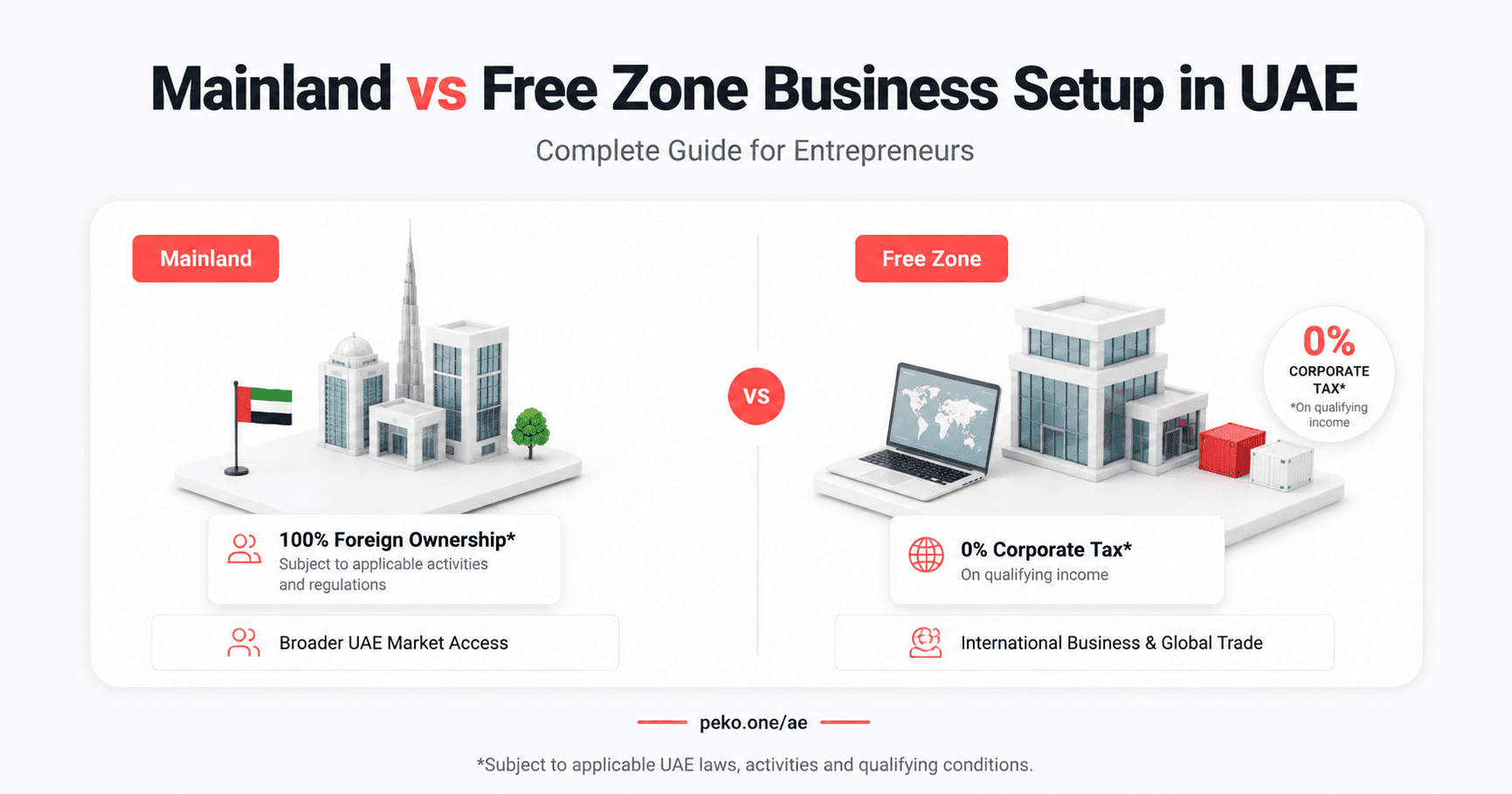
A mainland company is registered with the UAE government and can trade freely across all seven emirates, bid on government contracts, and serve local customers directly. A free zone company is registered within a designated economic zone and offers 100% foreign ownership, tax incentives, and faster setup, but is generally limited to operating within its zone or internationally.
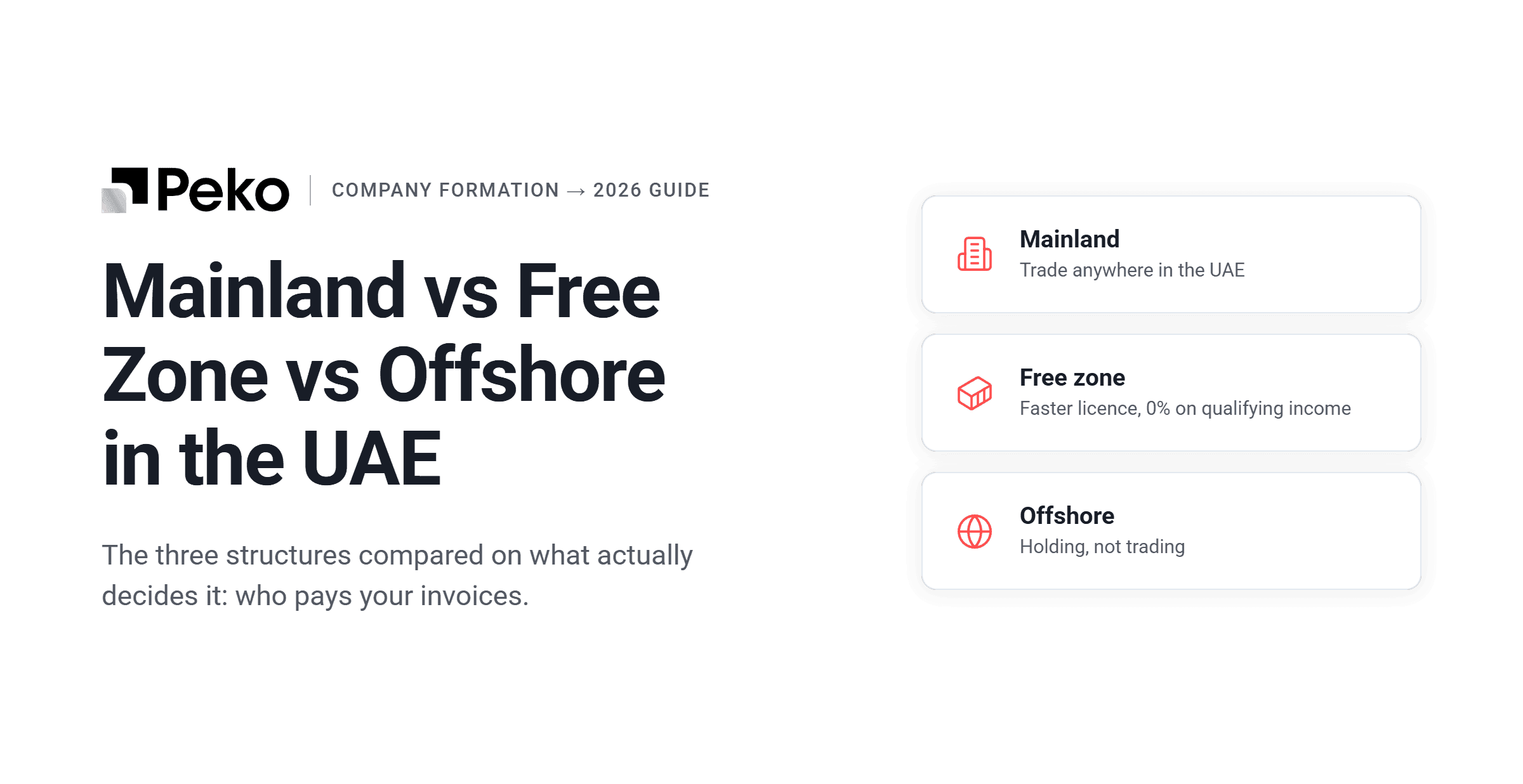
Choose mainland if your customers are in the UAE, you need government contracts, or you want unrestricted market access. Choose free zone if you serve international clients, want lower startup costs, or run a digital or consulting business. Choose offshore only for holding companies or international asset structuring offshore entities cannot operate inside the UAE.
Setup typically takes 3–7 working days with the right partner. Whichever structure you choose, Peko can help you register your business in any zone and manage everything from licensing to daily operations through a single platform.
Not sure which structure fits your business?
Talk to a UAE business setup expert → Free consultation
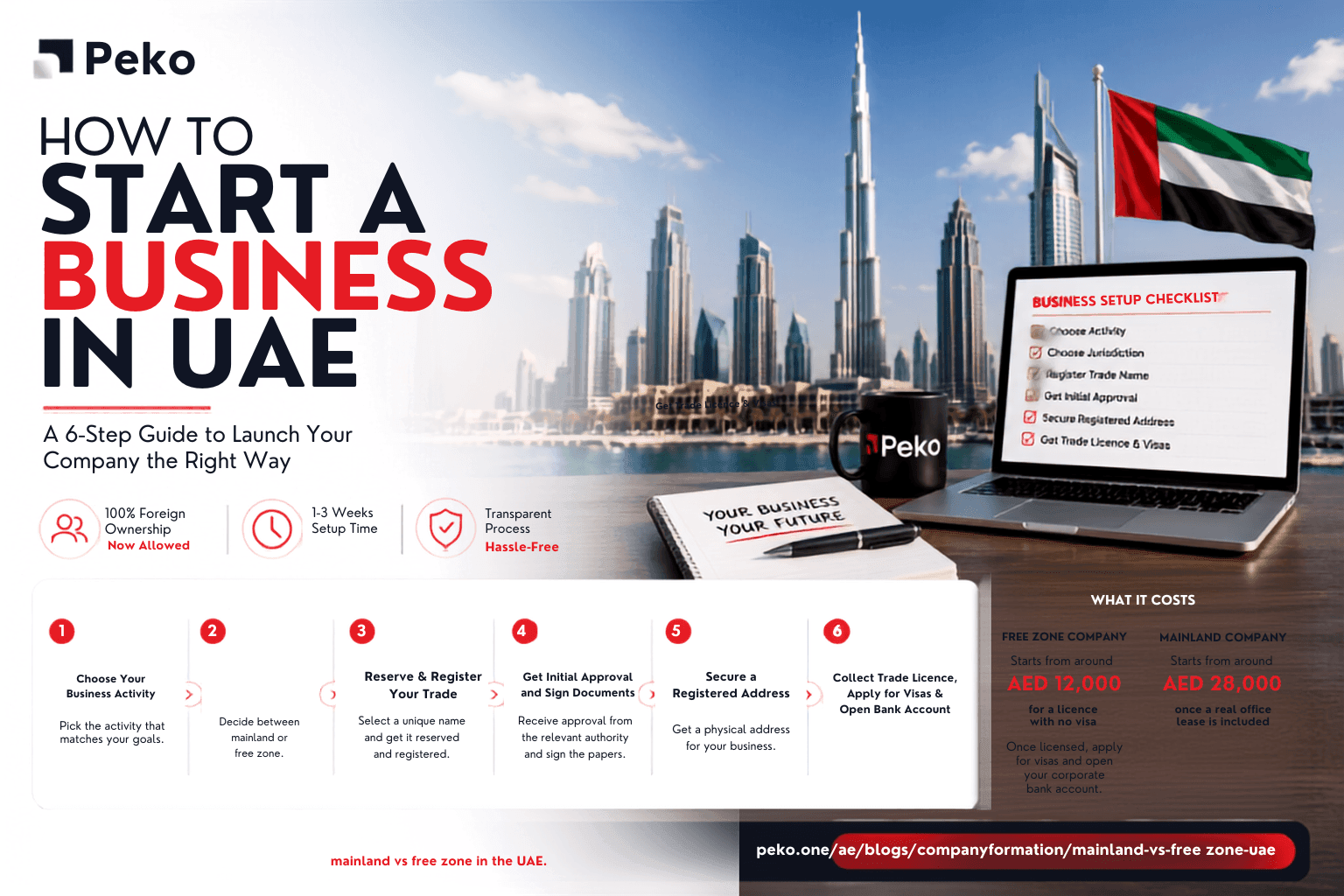
Many international founders exploring business setup in Dubai start by comparing mainland and free zone structures and for good reason. The structure you choose on day one affects where you can operate, who you can sell to, how many visas you get, and even which banks will open an account for you.
This guide breaks down both options cost, visas, banking, operations, and expansion ability, so you can make the right call for your business.
Why Entrepreneurs Choose the UAE for Company Formation
The UAE has become one of the world's most attractive destinations for company formation, and it's not hard to see why. A combination of zero personal income tax, strategic geographic positioning between Europe, Asia, and Africa, and a government that actively courts foreign entrepreneurs has turned Dubai and Abu Dhabi into global startup and business hubs.
Dubai company formation in particular has surged over the past decade. The city offers world-class infrastructure, a massive expat population that creates a ready-made consumer market, and a regulatory environment that has steadily simplified the process of starting and running a business. Whether you're launching an e-commerce brand, a consulting firm, or a construction company, the UAE has a licensing structure designed to accommodate your activity. Company incorporation in the UAE also happens under two entirely separate registries: emirate-level economic departments for mainland entities and 40+ independent free zone authorities, which is why the structure you pick determines your paperwork, not just your tax position.
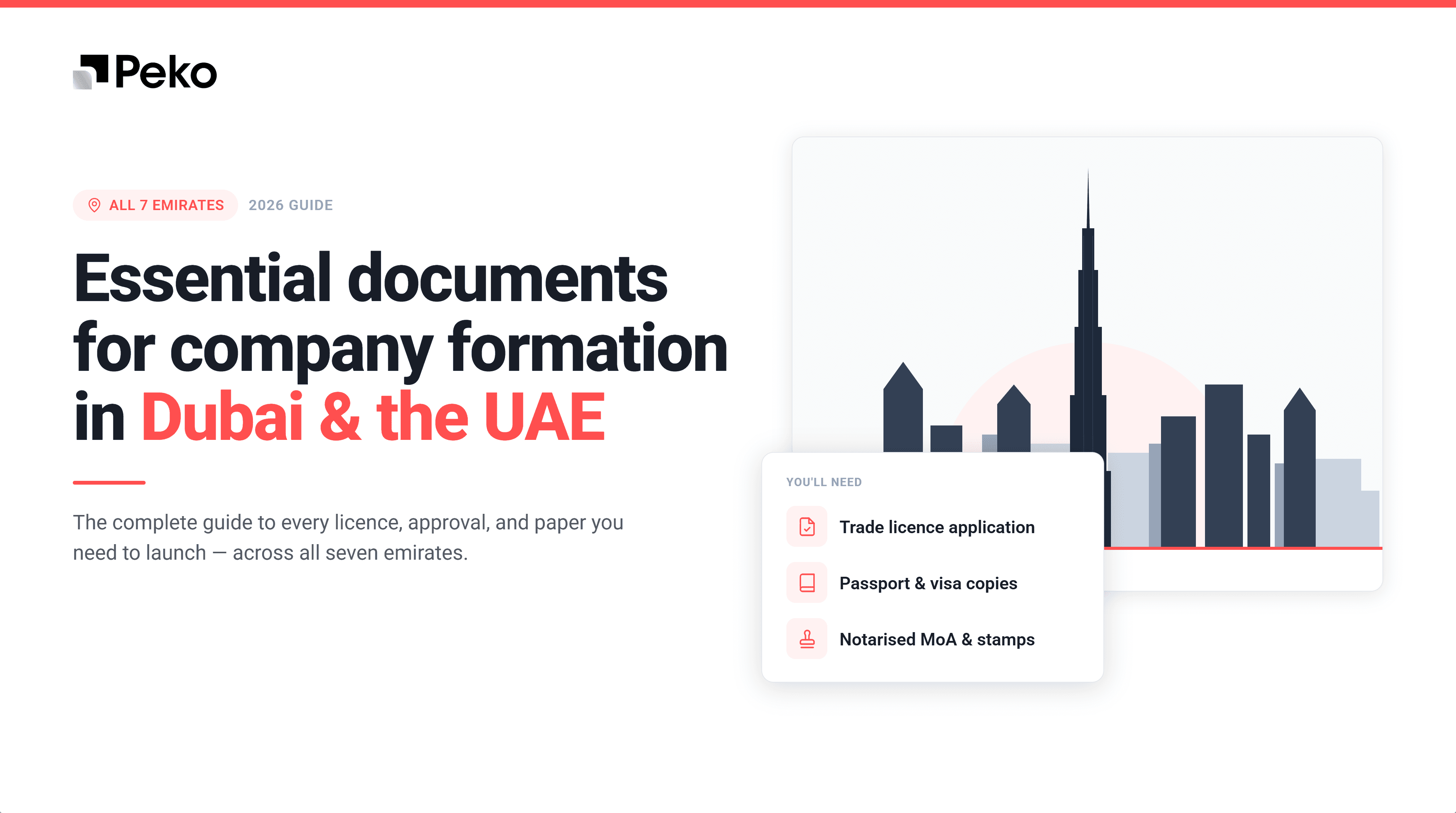
What makes the UAE especially compelling is speed. Unlike many countries where company formation can take months of paperwork and bureaucratic delays, the UAE has streamlined the process so that entrepreneurs can go from application to operational business in as little as a week. Combined with initiatives like golden visas for investors and entrepreneurs, the UAE is positioning itself not just as a place to register a company, but as a place to build a long-term business. For a full walk-through of what you need to get started, see our complete guide to documents required for company formation in Dubai.
What Is Mainland in the UAE?
A mainland company is registered directly with the UAE government and can operate anywhere in the UAE market without geographic restrictions.
Think of it as a standard business license that gives you full access to the country's economy. You can open offices in any emirate, sell to any customer (individuals, businesses, or government), and bid on public-sector contracts.
A mainland license in Dubai, for example, is issued by the Department of Economy and Tourism (DET) and allows your company to trade freely across all seven emirates.
Mainland companies are regulated by the same commercial laws that govern local businesses, which means they carry more credibility when working with government entities and large corporations.
What Is a Free Zone Company in the UAE?
A free zone company operates inside one of the UAE's 40+ special economic zones created specifically to attract foreign investment.
These zones offer a streamlined setup process with clear advantages: 100% foreign ownership, tax incentives, simplified company formation, and a built-in business ecosystem with shared infrastructure and networking opportunities.
Some of the most popular free zones include:
- DMCC — commodities, trading, and professional services
- DIFC — banking, finance, and fintech
- JAFZA — logistics and manufacturing
- RAKEZ — cost-effective option in Ras Al Khaimah
Each free zone has its own authority, licensing rules, and activity lists, so choosing the right zone matters just as much as choosing between mainland and free zone itself.
Mainland vs Free Zone: Key Differences Explained
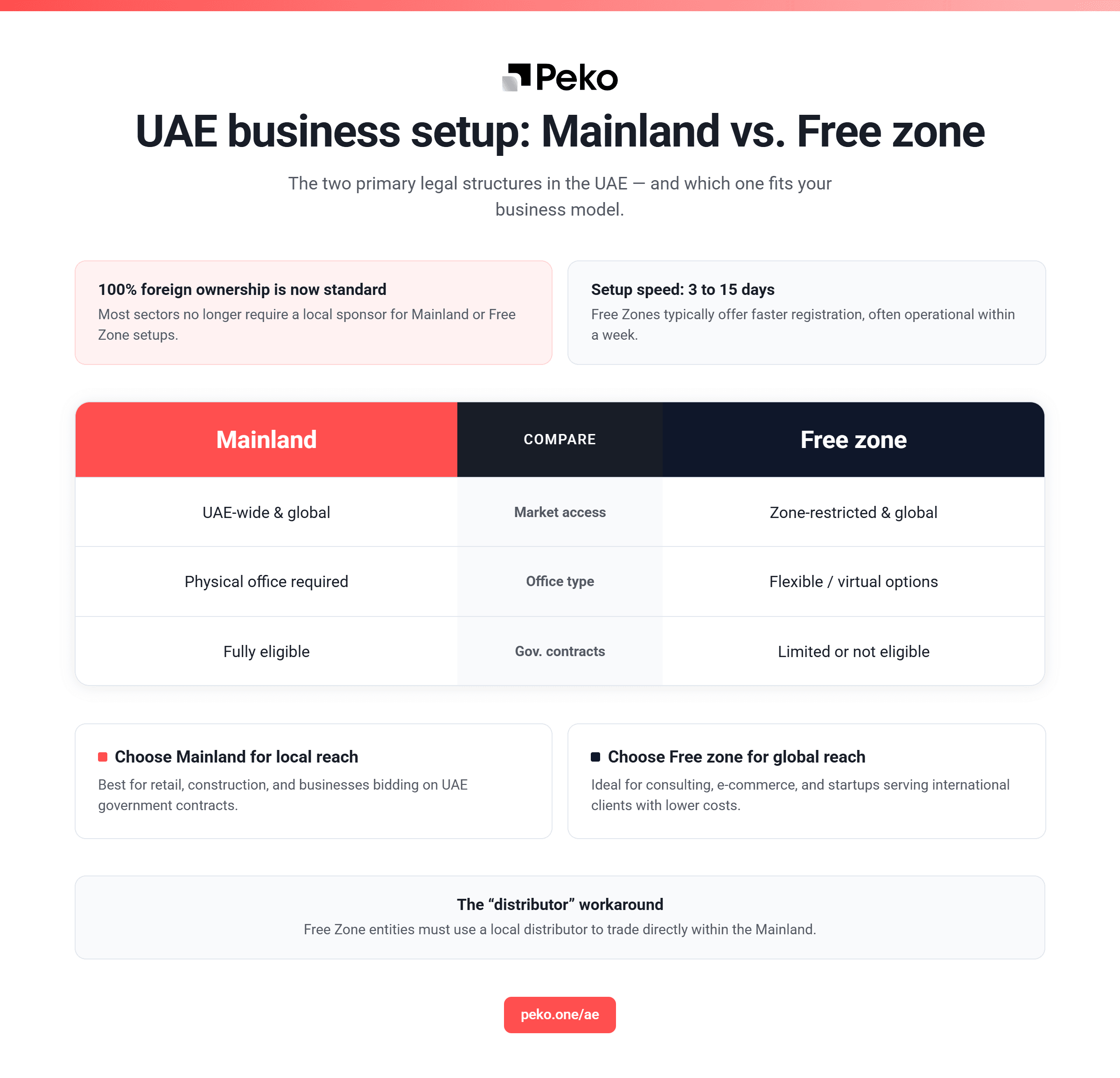
Here's a side-by-side comparison of the two structures:
The core trade-off is straightforward: mainland gives you full market access, while free zones give you speed, simplicity, and lower upfront costs. Your choice depends on who your customers are and where they're located.
Mainland vs Free Zone: Quick Decision Rule
Choose mainland if your customers are inside the UAE. You need unrestricted access to the local market, government tenders, and the widest range of banking options.
Choose a free zone if your customers are mostly international. You'll benefit from lower setup costs, faster registration, full foreign ownership, and a simpler operating environment for cross-border business.
Still not sure? Talk to a Peko Advisor - they'll match your business activity to the right structure in a free consultation.
Mainland vs Free Zone Incorporation: What Actually Changes on Paper
The commercial differences above are the ones founders debate. The incorporation differences are the ones that decide your timeline:
- Constitutional document — mainland incorporation requires a Memorandum of Association drafted and notarised before a Notary Public at the Dubai Courts, with every shareholder present or represented by an attested Power of Attorney. Free zone incorporation replaces this with a standardised document the zone issues itself, removing the court visit entirely.
- Proof of address — mainland needs an Ejari-registered commercial lease in place before the license is issued. Free zones accept a flexi-desk agreement they issue to you.
- Certificate of Incorporation — most free zones issue one; the mainland route relies on the trade license and Commercial Register entry instead.
- Amendments — changing shareholders, capital or activity after incorporation means re-drafting and re-notarising the MOA on the mainland (5–10 working days plus repeat notary fees), versus filing a zone form in most free zones.
Both document sets in full: documents required for company formation in Dubai.
Can Free Zone Companies Operate in Mainland UAE?
Not directly. Free zone companies are generally restricted from trading within the UAE mainland market unless they take one of two steps:
- Appoint a local distributor who is licensed on the mainland to sell your products or services on your behalf.
- Establish a mainland branch, which requires a separate license and registration with the relevant emirate's economic department.
This is one of the most misunderstood aspects of UAE business setup. Many entrepreneurs register in a free zone for the lower cost, then discover they can't invoice UAE-based clients directly. If your primary customers are in the UAE, a mainland license is usually the better choice from day one.
Do Mainland Companies Still Require a Local Sponsor?
This is one of the most common questions founders ask, and the answer has changed significantly.
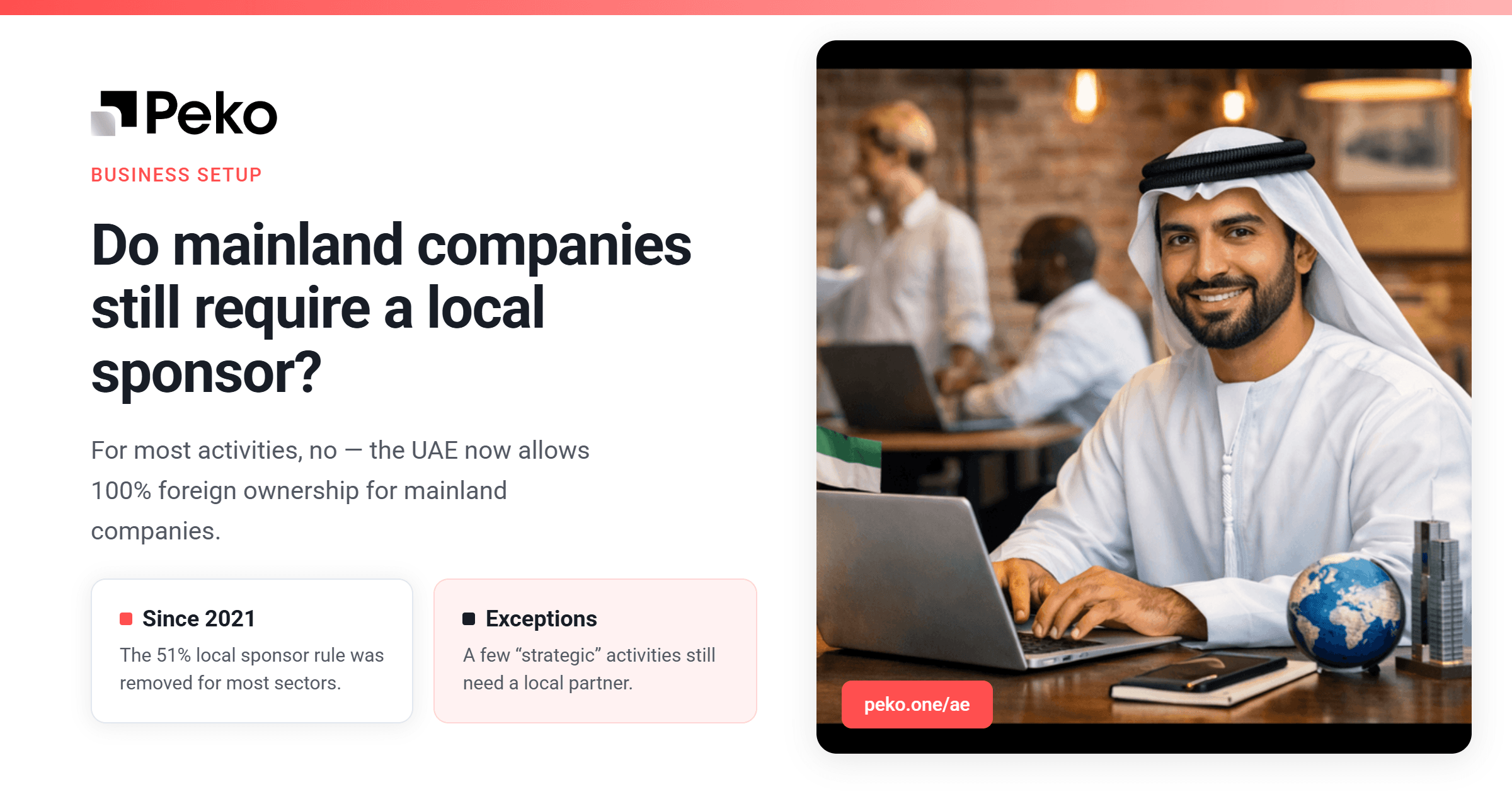
Under the UAE's updated Commercial Companies Law, most business activities now allow 100% foreign ownership for mainland companies. The previous requirement of a 51% local Emirati sponsor has been removed for the vast majority of sectors.
There are still a small number of activities classified as "strategic" where a local partner or service agent is required, but these are limited and clearly defined. For the overwhelming majority of entrepreneurs setting up a trading, services, or professional company on the mainland, full foreign ownership is now the standard.
This legal change, which came into effect in 2021, was a turning point for company formation in the UAE. It removed one of the biggest hesitations international founders had about choosing a mainland structure. If you're still seeing outdated advice online about needing a local sponsor, it likely refers to the old regulations.
Advantages of Mainland Company Setup
A mainland structure works best when your business needs direct access to the UAE's domestic market.
Why entrepreneurs choose mainland:
- Full market access: Sell to any customer, anywhere in the UAE, with no intermediary required
- Government contracts: Only mainland companies can bid on most public-sector work
- Unlimited expansion: Open branches in any emirate without additional entity formation
- Hiring flexibility: Fewer restrictions on visa quotas compared to many free zones
- Easier banking: Mainland companies are generally preferred by major UAE banks
Best suited for: retail shops, restaurants and hospitality, construction and contracting, healthcare services, real estate, and any business where your end customer is physically in the UAE.
Advantages of Free Zone Business Setup
Free zones are designed for businesses that operate internationally or don't need to sell directly into the UAE market.
Why entrepreneurs choose free zones:
- 100% foreign ownership guaranteed across all activity types
- Tax incentives including corporate tax exemptions for qualifying businesses
- Fast company formation - some zones process licenses in under a week
- Startup-friendly packages with flexi-desks, co-working spaces, and bundled services
Best suited for: consulting firms, e-commerce businesses, digital services and SaaS companies, import-export and international trade, freelancers and solopreneurs.
What Are the Disadvantages of Free Zones in UAE?
Free zones aren't perfect. Here's what you should know before committing:
Limited mainland market access is the biggest drawback. If you want to invoice companies or individuals based in the UAE (outside your free zone), you'll need a distributor or a separate mainland license.
Visa quotas can be restrictive. Some free zones tie the number of employee visas to your office space size. A flexi-desk package might only include two or three visas.
Certain activities are restricted. Not every free zone supports every business activity. You may find that your specific trade requires a mainland license.
Banking can take longer. Some traditional banks require additional documentation or higher minimum balances for free zone companies, which can delay your ability to start receiving payments.
That said, many entrepreneurs still choose free zones because the lower setup costs and faster registration outweigh these limitations especially for businesses that primarily serve international clients.
Banking Considerations for Mainland vs Free Zone Companies
Opening a business bank account is one of the first things founders worry about after registration and for good reason. Without an active bank account, you can't receive payments, pay suppliers, or process payroll.
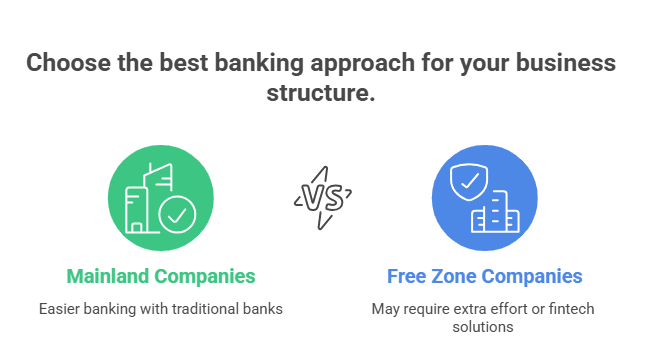
Mainland companies generally have an easier time with banking. Most major UAE banks including Emirates NBD, ADCB, Mashreq, and RAK Bank prefer mainland-licensed businesses because they operate under direct government regulation and have a clear physical presence. Account opening for mainland companies is typically straightforward, provided your documents are in order and your business activity is clearly defined.
Free zone companies can face more friction. Some traditional banks require additional due diligence for free zone entities, particularly if the business is newly formed or operates in a niche sector. That said, several free zones have built partnerships with banks and fintech providers to smooth this process. Zones like DMCC and DIFC, for example, are well-known to banks and rarely face pushback. Smaller or newer free zones may require more effort. The rise of fintech-friendly banking options including digital banks and payment platforms has also made it easier for free zone companies to get operational quickly, even if a traditional bank account takes a few extra weeks.
Documentation matters regardless of structure. Banks will typically ask for your trade license, shareholder passport copies, a business plan or company profile, proof of office address, and expected transaction volumes. Having these ready before you apply saves significant time. For a full list of what you'll need, check our guide to documents required for company formation in Dubai.
What Is a Mainland Visa in the UAE?
A mainland visa is an employment or residency visa issued for people working in companies registered under UAE mainland authorities (such as DET in Dubai or the Department of Economic Development in Abu Dhabi).
Mainland visas offer wider employment flexibility. Employees can work anywhere in the UAE without restrictions tied to a specific zone, which makes mainland visas practical for roles that require travel between emirates or client-site work.
What Is a Free Zone Visa in the UAE?
A free zone visa is issued by a specific free zone authority for employees working within that zone's jurisdiction.
Key things to know: free zone visas are tied to the issuing free zone company, subject to visa quotas set by the zone, and often processed faster than mainland visas due to the streamlined free zone administration.
For remote teams and international businesses, free zone visas are often sufficient since employees may not need to work outside the zone on a daily basis.
Free Zone Visa vs Mainland Visa: Which Is Better?
Neither is universally better — it depends on your business model.
Choose a mainland visa if your employees need to work across the UAE, visit client offices, or operate in multiple locations. Mainland visas offer the most operational flexibility.
Choose a free zone visa if your business operates internationally or remotely and your team works primarily from the free zone or from home. Free zone visas are typically faster to process and part of simpler employment packages.
The visa type follows the company structure, so this decision is usually made when you choose between mainland and free zone registration.
What Is Dubai Mainland?
Dubai mainland refers to all areas outside of free zones where companies are regulated by the Department of Economy and Tourism (DET). This includes the vast majority of Dubai's commercial areas — from Deira and Bur Dubai to Business Bay and beyond.
Companies registered on the Dubai mainland can operate throughout the UAE without geographic restriction. When people say "mainland company in Dubai," they mean a business licensed by DET rather than by a free zone authority.
Is JLT Mainland or Free Zone?
JLT (Jumeirah Lakes Towers) is part of the DMCC Free Zone. Companies registered in JLT hold DMCC free zone licenses, not mainland licenses.
This is a common point of confusion because JLT looks and feels like a regular Dubai neighborhood. But commercially, it operates under DMCC's free zone regulations.
Is DIFC a Free Zone or Mainland?
DIFC (Dubai International Financial Centre) is a financial free zone — and a unique one at that. It operates under its own legal framework based on English common law, with its own courts and regulatory authority.
DIFC specializes in banking, finance, fintech, and wealth management. Companies registered in DIFC benefit from the free zone advantages (full ownership, tax incentives) plus a globally recognized regulatory environment that is particularly attractive to financial services firms.
How Do Free Zones Work in the UAE?
Free zones are government-designated economic areas created to attract foreign investment and simplify business formation.
Here's how they work in practice: each free zone is managed by its own authority that handles licensing, visa processing, and office space. You apply for a license based on your business activity, choose an office package (from a flexi-desk to a full warehouse), and the free zone processes your trade license, visa applications, and corporate documentation often through a single portal.
Free zones provide simplified licensing with fewer approvals needed, tax benefits for qualifying activities, full foreign ownership without a local partner, and infrastructure support including offices, warehouses, and shared facilities.
The trade-off for this simplicity is that your commercial activity is generally limited to the free zone and international markets, not the broader UAE economy.
Which Is the Cheapest Free Zone in Dubai?
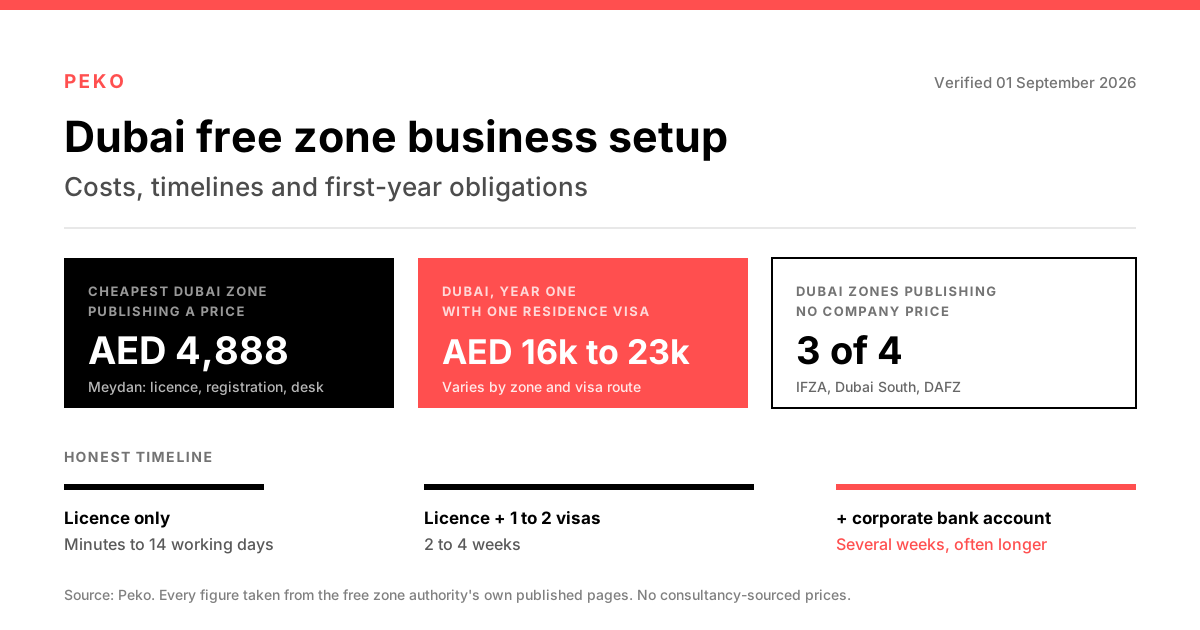
The cheapest depends on what's in the package - visa allocation, office type, number of activities and several Dubai-area zones don't publish prices at all, which is why the figures circulating online mostly come from agents rather than the zones themselves. We keep verified, source-dated 2026 pricing for eight zones, including which ones actually publish a number, in our Dubai free zone business setup guide.
DO You Need an Offshore Company Instead.
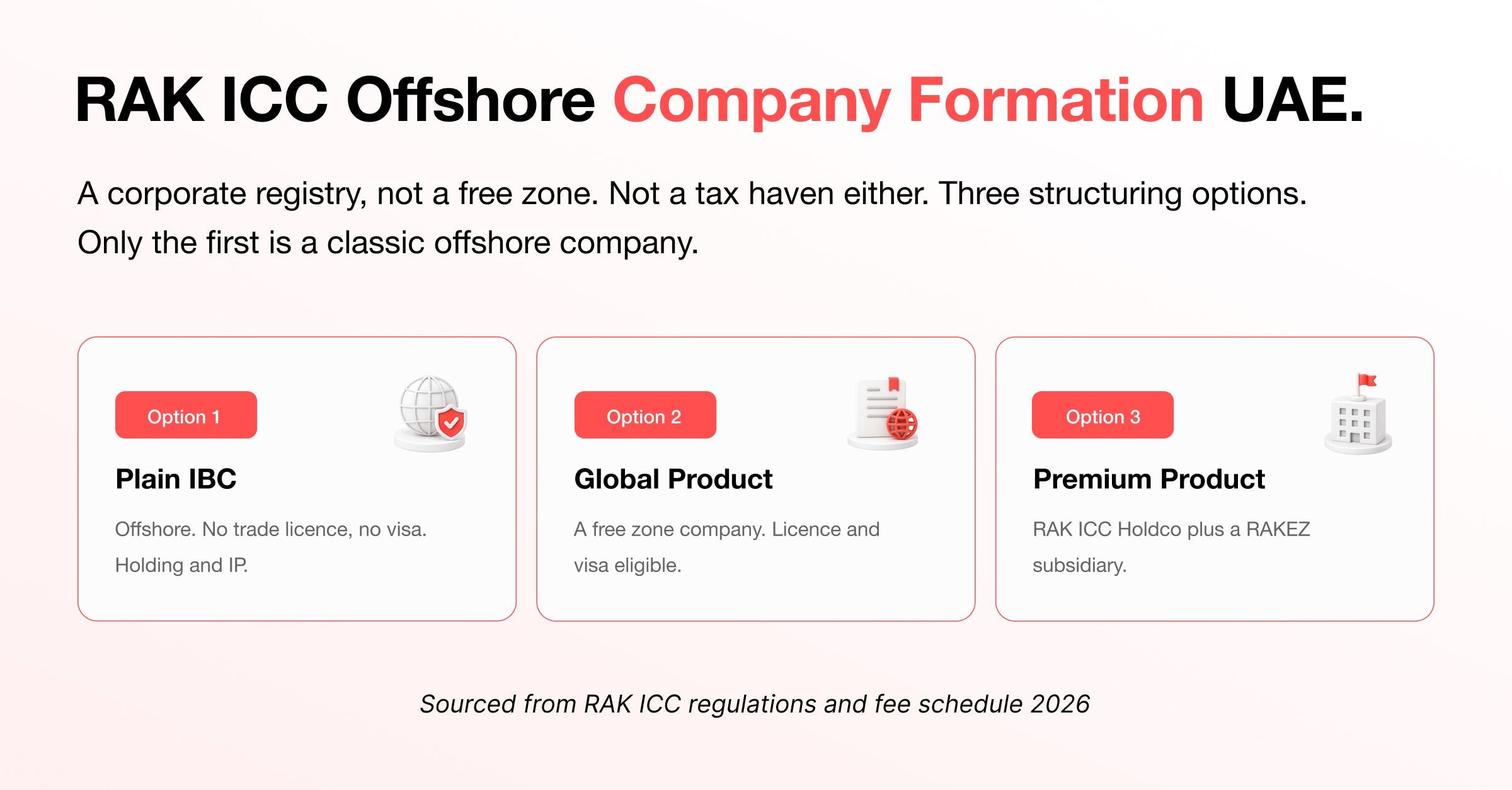
Offshore is a third structure and a narrower one. An offshore company can hold assets and trade internationally, but it cannot operate inside the UAE, issue visas, or rent premises here, which rules it out for almost everyone weighing mainland against free zone.
If you're comparing all three, we put them side by side in our guide to mainland vs free zone vs offshore in the UAE. For the offshore route specifically, see our RAK ICC company formation guide.
How Peko Helps You Start and Run Your Business in the UAE
Choosing between mainland and free zone is step one. Actually getting set up licenses, visas, documentation, office space is where things get complicated. And once you're registered, running daily operations across fragmented tools is where most founders lose time.
That's why Peko is built as an all-in-one business superapp, not just a formation service, but a complete platform for running your company.
Peko Start handles the entire formation process: business registration in any mainland or free zone structure, trade license acquisition, visa processing, office setup, and documentation support. Most businesses become operational within 3 to 7 working days, depending on the structure and documentation.
Once you're up and running, Peko becomes your single platform for business operations - payments, payroll, expense management, invoicing, and financial automation all in one place. No juggling five different tools. No manual reconciliation. Just one app to run your entire business.
For a deeper look at how to streamline your company's operations from day one, read our guide on UAE business operations and automation.
Talk to a UAE Business Setup Expert
Still unsure which structure is right for your business? Speak with a Peko advisor for a free consultation. You'll get a structure comparison tailored to your business activity, a clear breakdown of costs and timelines, and a personalized setup plan that avoids costly mistakes.
Frequently Asked Questions
What is the difference between free zone and mainland UAE?
Mainland companies can operate across the entire UAE market and are eligible for government contracts. Free zone companies benefit from tax advantages and guaranteed full foreign ownership but are generally limited to operating within their designated free zone or serving international clients.
Can free zone companies do business in mainland UAE?
Yes, but not directly. Free zone companies typically need to appoint a licensed local distributor or establish a separate mainland branch to trade within the UAE market. The specific requirements depend on the business activity.
What is a mainland license in Dubai?
A mainland license is issued by the Department of Economy and Tourism (DET) and allows a company to operate anywhere within the UAE market. There are no geographic restrictions on where the business can trade or who it can serve.
What is a free zone company in Dubai?
A free zone company is registered within a designated economic zone and benefits from simplified regulations, tax advantages, and full foreign ownership. It operates under the rules of its specific free zone authority rather than the broader UAE commercial law.
Is a free zone visa better than a mainland visa?
It depends on your business. A mainland visa offers more flexibility for employees who need to work across the UAE. A free zone visa is often processed faster and works well for businesses that operate remotely or internationally. The right choice follows your company structure.
Do I need a local sponsor to start a business in the UAE?
In most cases, no. Since the 2021 update to the Commercial Companies Law, the majority of mainland business activities allow 100% foreign ownership without a local sponsor. A small number of strategic activities still require a local partner, but these are clearly defined exceptions.
More Questions on UAE Company Incorporation
Is company incorporation in the UAE the same as company formation?
Yes. In UAE practice, the two terms describe the same process, and the authorities themselves use "formation" or "registration" in their documentation. Incorporation is the narrower legal moment your entity comes into existence; formation is the whole journey through licensing, visas and banking. The distinction only matters commercially: if a consultant quotes you for incorporation only, check whether visas, office and bank account support are inside the price.
Can I move from free zone to mainland incorporation later?
You don't convert the entity — you add to it. Under Executive Council Resolution No. 11 of 2025, Dubai free zone companies can open a mainland branch, which buys mainland market access without dissolving the free zone entity. The alternative — incorporating a fresh mainland company and migrating operations — means new license fees, a new MOA, and a new bank account application from scratch.
Which is faster to incorporate, mainland or free zone?
Free zone, consistently. Free zone incorporation completes in 3–7 working days because the zone authority handles licensing, the constitutional document and visas through a single portal. Mainland incorporation runs 7–15 working days, largely because of MOA notarisation at the Dubai Courts and the Ejari requirement. Banking is the real variable in both cases and can add 2–4 weeks on top.
Final Thoughts
The mainland vs free zone decision isn't about which structure is objectively better, it's about which one fits your business model, your customers, and your growth plan.
If you're selling to the UAE market, serving walk-in customers, or chasing government contracts, go mainland. If you're building a digital business, consulting internationally, or bootstrapping a startup with minimal overhead, a free zone will likely serve you better. And if you need both, plenty of entrepreneurs start in a free zone and add a mainland branch as they scale.
Whatever you choose, the real advantage comes from getting set up correctly the first time and having the right systems in place to operate efficiently from day one. That's exactly what Peko was built for a business superapp that takes you from company formation to full-scale operations without the patchwork of disconnected tools.
Your business idea is the hard part. The setup shouldn't be.