- Blogs
- Company Formation
- Documents Required for Company Formation in Dubai & UAE (2026 Checklist)
Feb 16, 2026
Documents Required for Company Formation in Dubai & UAE (2026 Checklist)
Share this article
- What Documents Are Required For Company Formation in Dubai & UAE (2026 Checklist)
- What documents are required for company formation in Dubai?
- Company Formation Documents Checklist - Dubai & UAE (2026)
- Why Dubai Leads Business Formation in the UAE
- Detailed Breakdown of Company Formation Documents in Dubai
- Documents Required for Offshore Company Formation in the UAE
- Mainland vs Free Zone Documentation in Dubai
- Dubai Free Zone Company Documents - What's Different
- Documents for Company Formation in Dubai for Foreigners (No Residency Required)
- Corporate Shareholder Documents for a Dubai Company
- Certificate of Incorporation in Dubai: What It Is and Who Issues It
- Special Regulatory Approvals & Sector-Specific Documents (Healthcare, Finance, Education)
- Common Documentation Mistakes That Delay Dubai Company Registration
- How Long Does Dubai Company Formation Take?
- Post-License Requirements After Company Formation
- Dubai Company Formation Cost Factors (2026)
- Start Your Company in Dubai with Confidence
- Frequently Asked Questions About Company Formation in Dubai & UAE
- Final Word: Documentation Decides Approval Speed
What Documents Are Required For Company Formation in Dubai & UAE (2026 Checklist)
Last updated: June 2026
To start a company in Dubai, entrepreneurs must submit several key documents, including passport copies of shareholders, trade name approval, selected business activity, office address documentation, and the Memorandum of Association. These documents verify ownership, regulatory compliance, and business structure before a trade license can be issued in the UAE.
Quick Summary
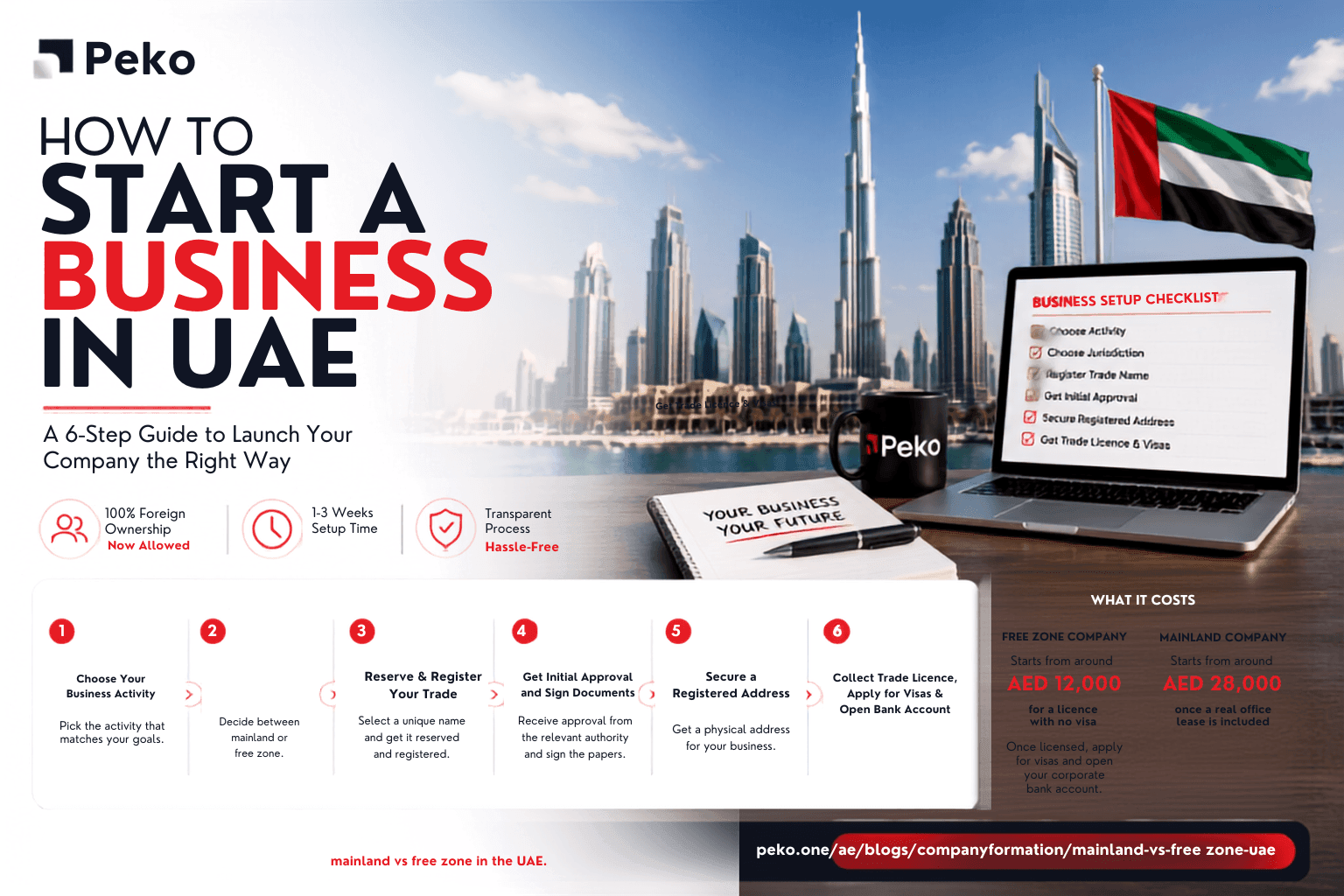
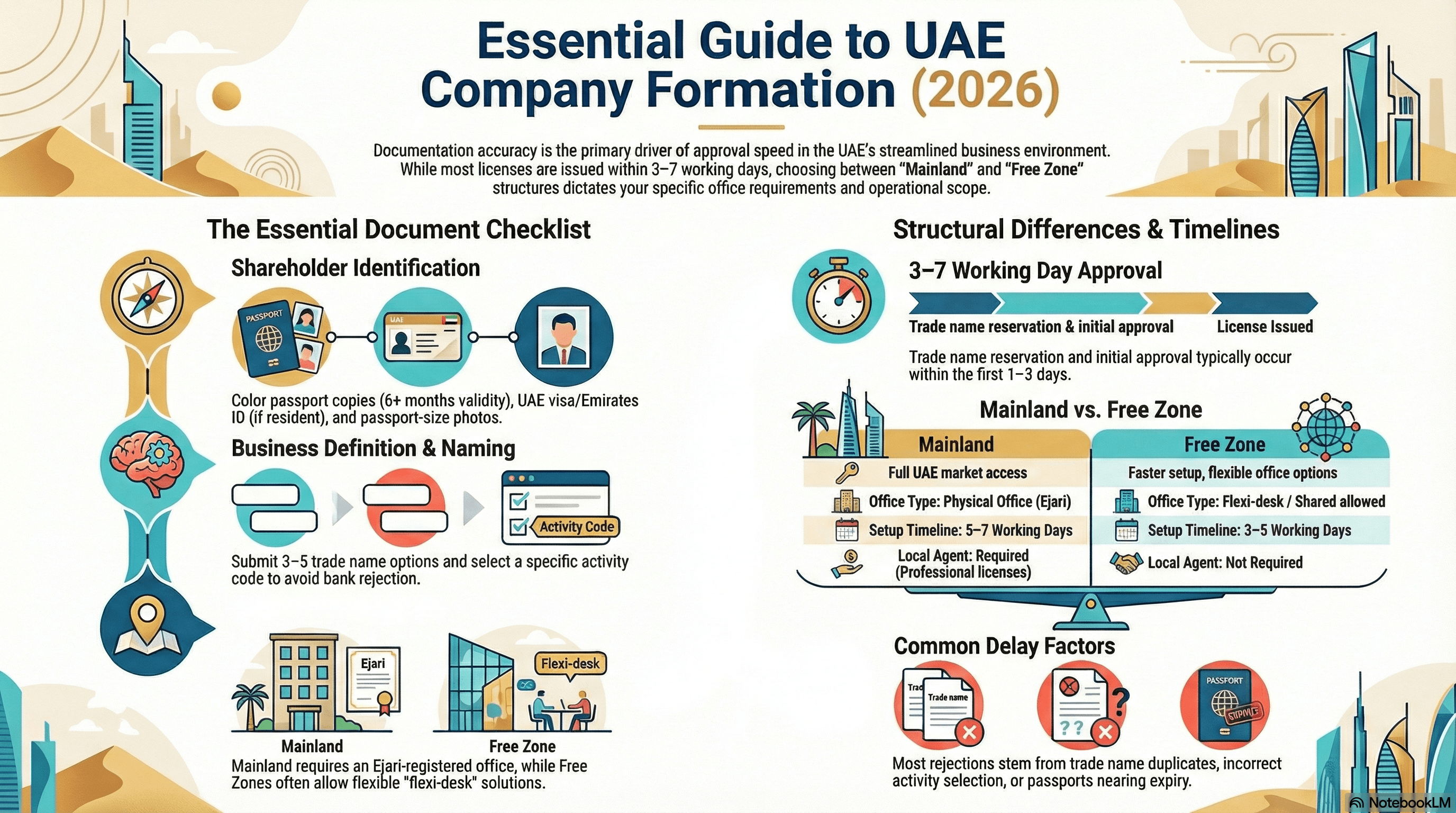
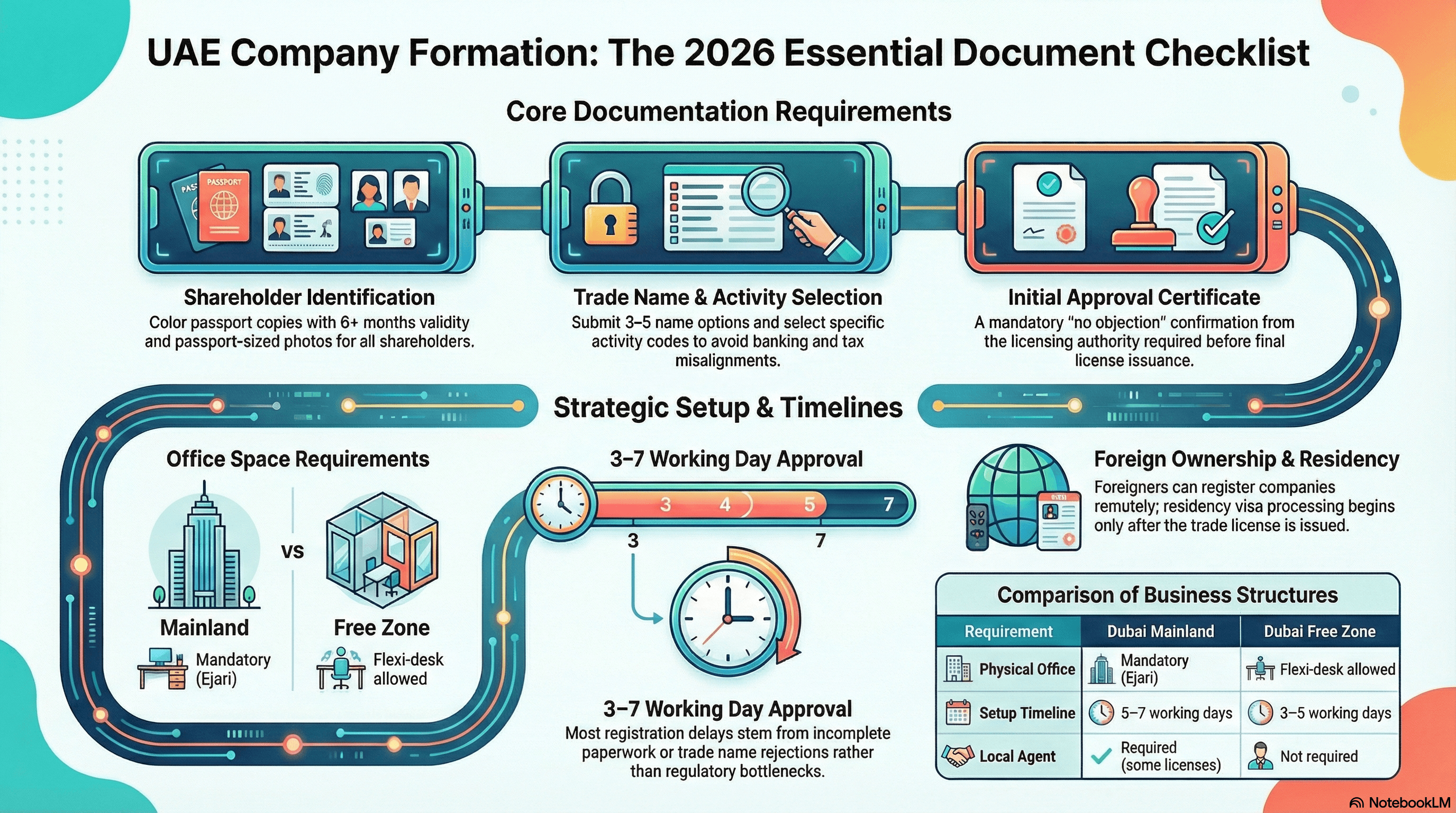
To open a company in Dubai or the UAE in 2026, you need passport copies of all shareholders, trade name approval, selected business activity, office address proof, and initial authority approval. Mainland companies require a registered office (Ejari) and a Memorandum of Association, while free zones may allow flexi-desk setups. Most companies can be registered within 3–7 working days if documents are accurate and complete. If you searched for the documents required for company incorporation in Dubai, this is the same checklist. The UAE uses formation, incorporation and registration interchangeably, and no authority maintains a separate incorporation filing.
Starting a company in Dubai is one of the most efficient business setup processes globally. However, while the UAE system is streamlined, the accuracy of documentation determines the speed of approval.
Most delays in company formation do not occur because the system is complex; they happen due to incomplete paperwork, incorrect business activity selection, or trade name rejection.
This guide explains exactly what documents are required for company formation in Dubai and across all UAE Emirates, including mainland and free zone structures.
What documents are required for company formation in Dubai?
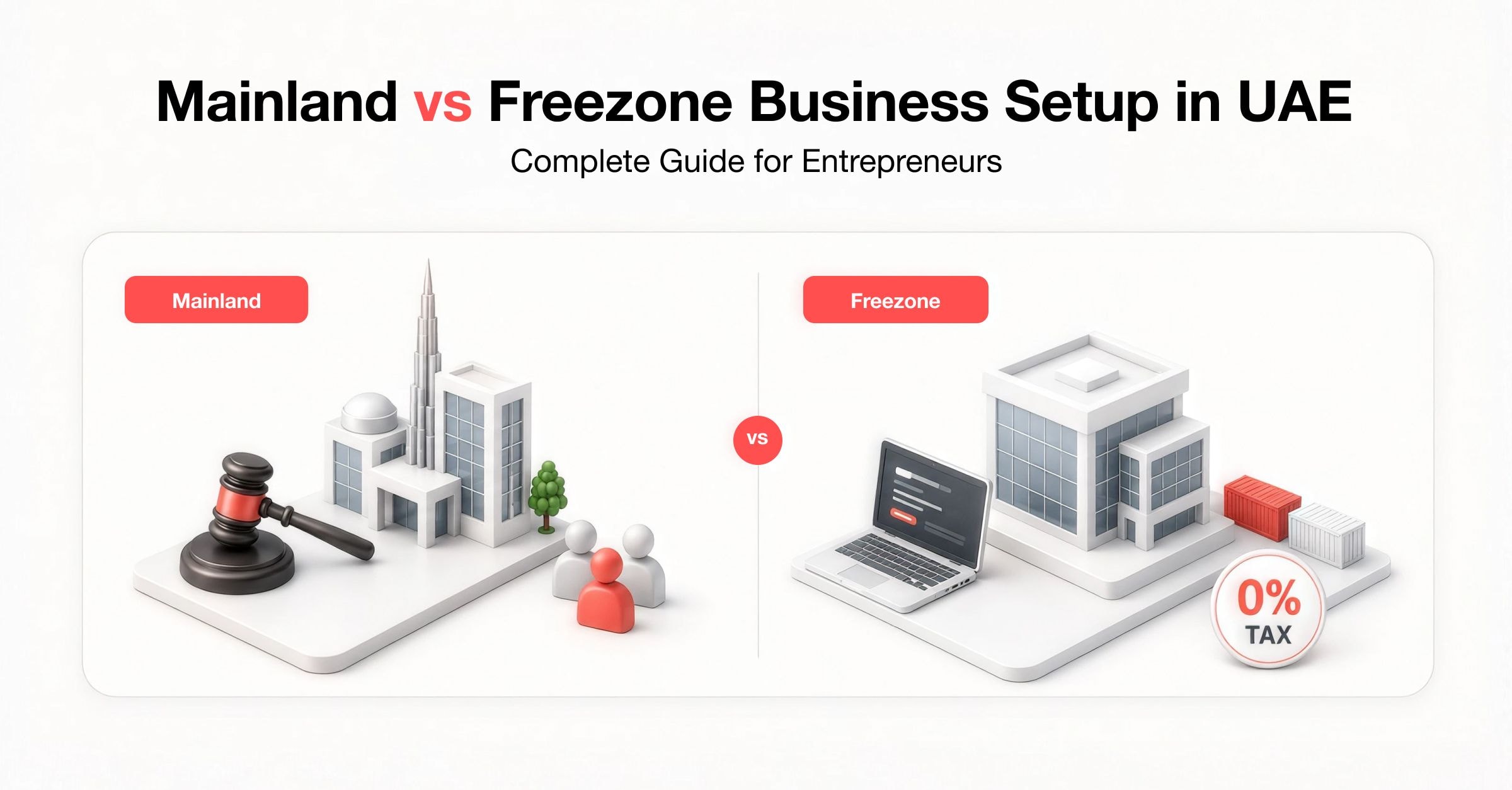
To register a company in Dubai, you need passport copies of shareholders, trade name approval, selected business activity, office address proof, and initial approval from the licensing authority. Mainland companies require a Memorandum of Association and an Ejari-registered office, while free zone companies may allow flexi-desk office solutions.
Most companies can be registered within 3–7 working days if documents are complete and correctly submitted.
Company Formation Documents Checklist - Dubai & UAE (2026)
What documents are needed to open a company in Dubai?
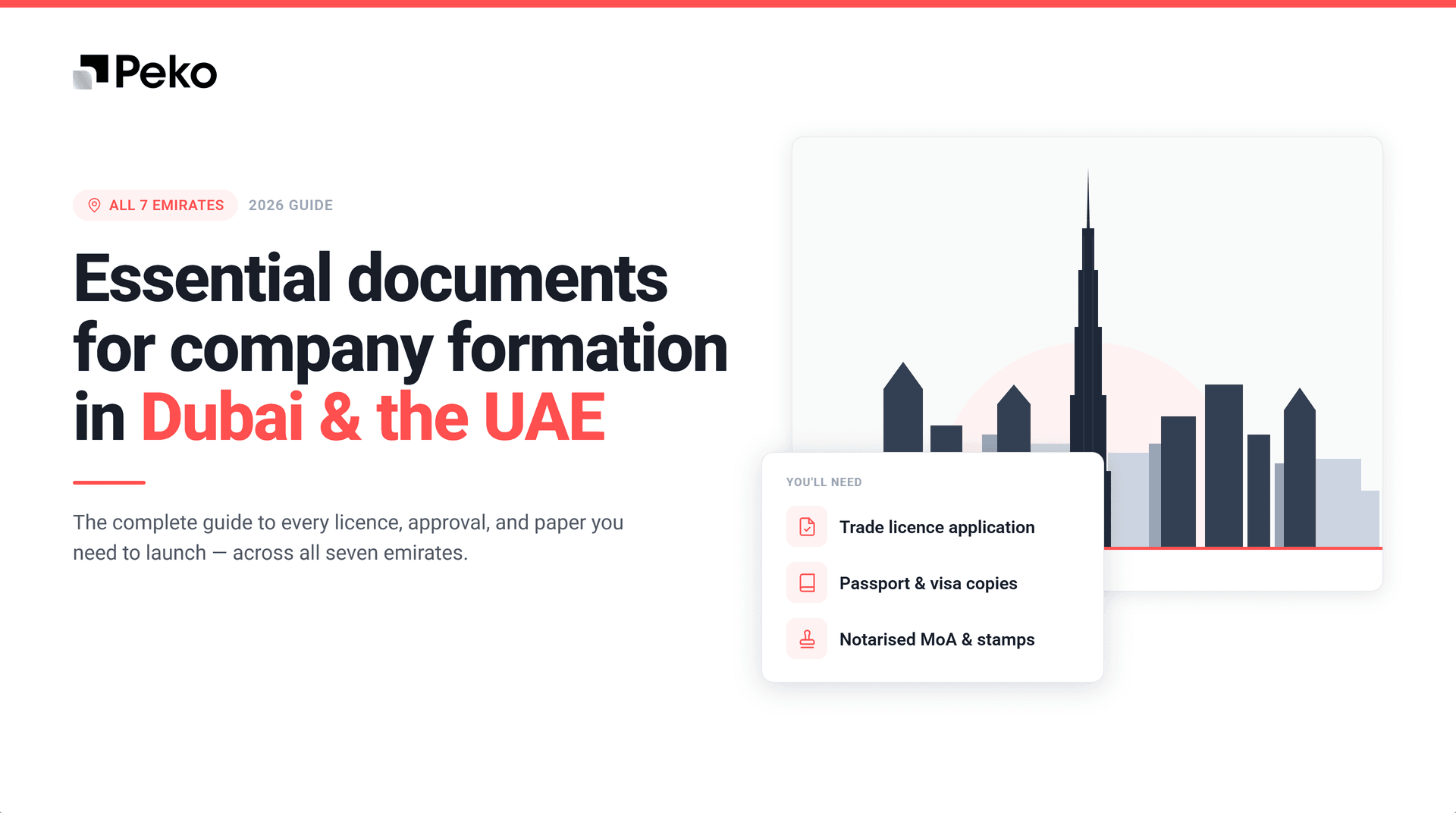
- Passport copies of all shareholders (minimum 6-month validity)
- UAE visa copy (if resident)
- Emirates ID (for UAE residents)
- Passport-size photographs
- 3–5 trade name options
- Business activity selection
- Office lease agreement (Ejari for mainland or flexi-desk for free zone)
- Memorandum of Association (mainland companies)
- Initial approval certificate from the relevant authority
Additional documents may be required for regulated industries such as healthcare, finance, or education.
Why Dubai Leads Business Formation in the UAE
Dubai remains the primary commercial hub of the UAE due to:
- Strategic global trade access
- Established financial ecosystem
- International banking infrastructure
- Strong free zone network (DMCC, DIFC, DAFZA, JAFZA, etc.)
- Flexible mainland licensing
However, Abu Dhabi, Sharjah, Ras Al Khaimah, Ajman, Fujairah, and Umm Al Quwain are rapidly developing competitive business environments.
While licensing authorities differ across Emirates, core documentation requirements remain largely consistent.
Detailed Breakdown of Company Formation Documents in Dubai
Understanding each document requirement prevents avoidable delays.
1. Passport Copies of Shareholders
All shareholders must submit:
- Clear, color passport copies
- Passport validity of at least 6 months
Passports nearing expiry are often rejected.
2. Trade Name Reservation
Applicants must provide 3–5 proposed company names.
Trade names must:
- Not duplicate existing companies
- Avoid religious, political, or offensive terms
- Align with the selected business activity
Trade name rejection is one of the most common causes of delay.
Pre-screening names before submission significantly reduces rejection risk.
3. Business Activity Selection
Every UAE trade license is tied to a specific activity code.
Incorrect activity selection may result in:
- Bank account rejection
- Corporate tax misalignment
- Regulatory non-compliance
- Future license amendments
Each Dubai trade license is mapped to a specific activity code - DED's activity catalogue for mainland setups, or a zone-specific list for free zones. Misalignment is the most common silent killer in Dubai company formation: a wrong code typically clears the trade license but causes a bank-account rejection 30–60 days later, when the bank's compliance team spots that the licensed activity doesn't match the business model in the account application.
Selecting the correct business activity at formation stage is critical for long-term operational the stability.
Structured on-boarding processes, such as those used in Peko Start, help align activity selection with licensing categories before authority submission.
4. Office Address Documentation
Documentation differs between mainland and free zone companies.
For Dubai Mainland:
- Physical office required
- Ejari registration mandatory
For Free Zones:
- Flexi-desk or shared office often acceptable
- Physical office optional in many cases
No valid office documentation means license issuance cannot proceed.
5. Memorandum of Association (MOA) For Dubai Company Formation
The Memorandum of Association (MOA) is the constitutional document of every mainland LLC in Dubai. It defines who owns the company, in what proportion, what the company is licensed to do, and how partners interact. Free zone companies do not draft a custom MOA; each free zone issues its own standardised constitutional document in its place. For MOA Dubai company formation purposes, mainland founders should plan for the following.
(1) What the MOA must contain. Every mainland Dubai MOA specifies: the legal name and trade name, registered office address (must match the Ejari lease), share capital amount and currency, share distribution between all partners, names and passport details of every shareholder, business activity (matched to the DET activity code on the trade license), manager appointment, and dispute-resolution forum. A standard LLC MOA in Dubai runs 6–12 pages.
(2) Notarisation flow at the Dubai Courts. The MOA is signed by all shareholders in front of a Notary Public at the Dubai Courts. Each shareholder presents their original passport (and Emirates ID if resident), and signs in person. Where a shareholder cannot attend, a notarised and attested Power of Attorney (POA) allows a representative to sign on their behalf — see the foreigner-without-residency section below. The notary fee is calculated as a percentage of share capital, with statutory minimums and caps.
(3) Post-formation amendments. Any of the following changes requires the MOA to be re-drafted, re-signed, and re-notarised: a transfer of shares, addition or removal of a shareholder, change in share capital, change in business activity, change of manager, or change of registered office. Amendments are filed with DET, and the change is reflected on the trade license. Plan for 5–10 working days per amendment and budget for repeat notary fees, these are the most commonly forgotten ongoing cost in Dubai mainland operations.
Documents Required for Offshore Company Formation in the UAE
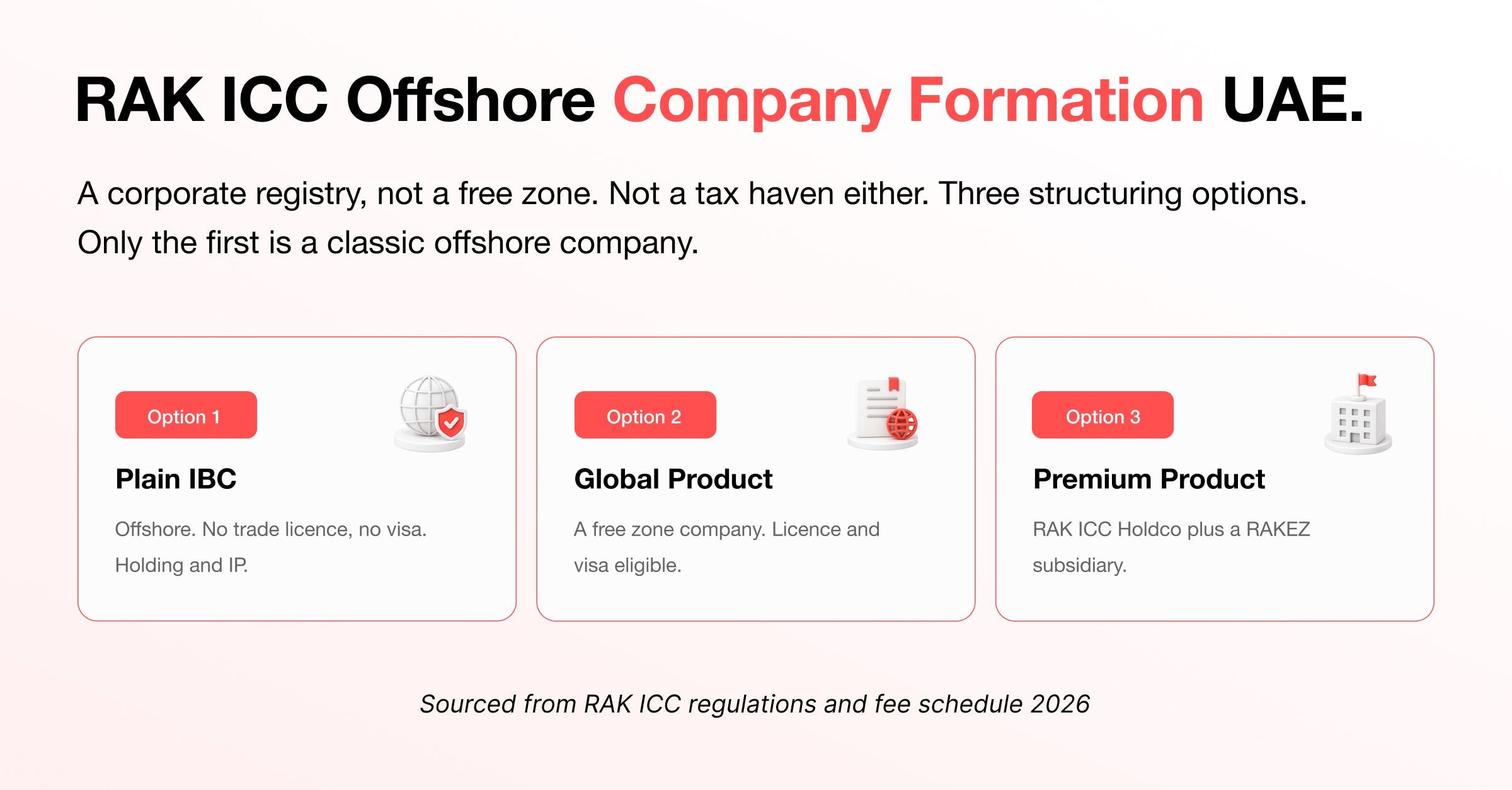
Offshore companies are the UAE's third structure alongside mainland and free zone, and they serve a completely different purpose - international holding, asset protection, intellectual property ownership, and cross-border trading rather than UAE-domestic operations. Three jurisdictions dominate: JAFZA Offshore (Dubai), RAK ICC (Ras Al Khaimah International Corporate Centre), and Ajman Offshore. The documents required for offshore company formation in the UAE are lighter than mainland but come with structural restrictions every founder should understand before incorporating.
(1) Core documents required for all three jurisdictions. Passport copies of every shareholder and director (minimum 6 months validity), proof of residential address dated within the last 3 months (utility bill or bank statement), CV or résumé of each shareholder/director, bank reference letter from the founder's existing bank, the proposed company name (three alternatives), and a brief description of the intended business activity. Corporate shareholders must additionally provide their Certificate of Incorporation, Memorandum & Articles of Association, Board Resolution, and a current Certificate of Good Standing all attested per the foreigner attestation chain.
(2) The Registered Agent requirement. Unlike mainland or free zone, offshore companies cannot be incorporated directly with the registrar. Every JAFZA Offshore, RAK ICC, and Ajman Offshore company must be set up through an approved Registered Agent who acts as the licensed intermediary. The Agent files documents, holds the company seal, receives official correspondence on the company's behalf, and is the only entity the registrar accepts submissions from. Choosing the Agent is the first practical step in any UAE offshore setup.
(3) Restrictions to plan around. UAE offshore companies cannot lease physical office space in the UAE, cannot sponsor UAE residence visas, and cannot trade with the UAE mainland market without a separate onshore distributor. They can hold UAE real estate (RAK ICC and JAFZA only, in approved freehold zones), open international bank accounts, and own intellectual property, but a UAE bank account is increasingly difficult to obtain for offshore entities and may require a separate onshore presence. Confirm banking feasibility before incorporating, not after.
Document Attestation: UAE Embassy & MOFA Process:
Any document issued outside the UAE, whether a parent company's Certificate of Incorporation, a Board Resolution, a Power of Attorney, or an educational certificate, must be attested through a four-step chain before a UAE authority will accept it;
(1) Home-country notarisation by a licensed notary public in the country where the document was issued.
(2) Home-country Ministry of Foreign Affairs (MOFA) verifies the notary's signature.
(3) UAE Embassy in the home country attests the document for use inside the UAE.
(4) UAE MOFA completes the chain by attesting the document on arrival in the UAE, this is the final stamp Dubai authorities check for. Documents not in English or Arabic must additionally be translated by a UAE-licensed legal translator after Step 4. Plan for 2–4 weeks for the full chain. Documents from Hague Apostille Convention countries follow a shorter route. A single apostille from the home-country competent authority replaces Steps 1–3, leaving only Step 4 and any translation.
UBO Declaration - Ultimate Beneficial Owner Requirements in the UAE
Every UAE company - mainland, free zone, and offshore, must identify and declare its Ultimate Beneficial Owner (UBO). A UBO is any individual who ultimately owns or controls 25% or more of the company's shares, voting rights, or distributions, whether held directly or through corporate vehicles. The UBO Declaration is filed at the point of formation alongside the Memorandum of Association and must be maintained on the company's internal UBO Register. The fine for non-compliance is up to AED 100,000. UBO information must be kept current, any change in ownership above the 25% threshold must be reflected in the UBO Register within 15 days, and the updated declaration filed with the licensing authority. This obligation continues annually for the life of the company.
6. Initial Approval Certificate
This confirms:
- The authority has no objection to your business activity
- The registration process may proceed
It is issued before final trade license approval.
Mainland vs Free Zone Documentation in Dubai
Understanding structural differences helps founders choose correctly.
Dubai Mainland Company Documents - What's Required
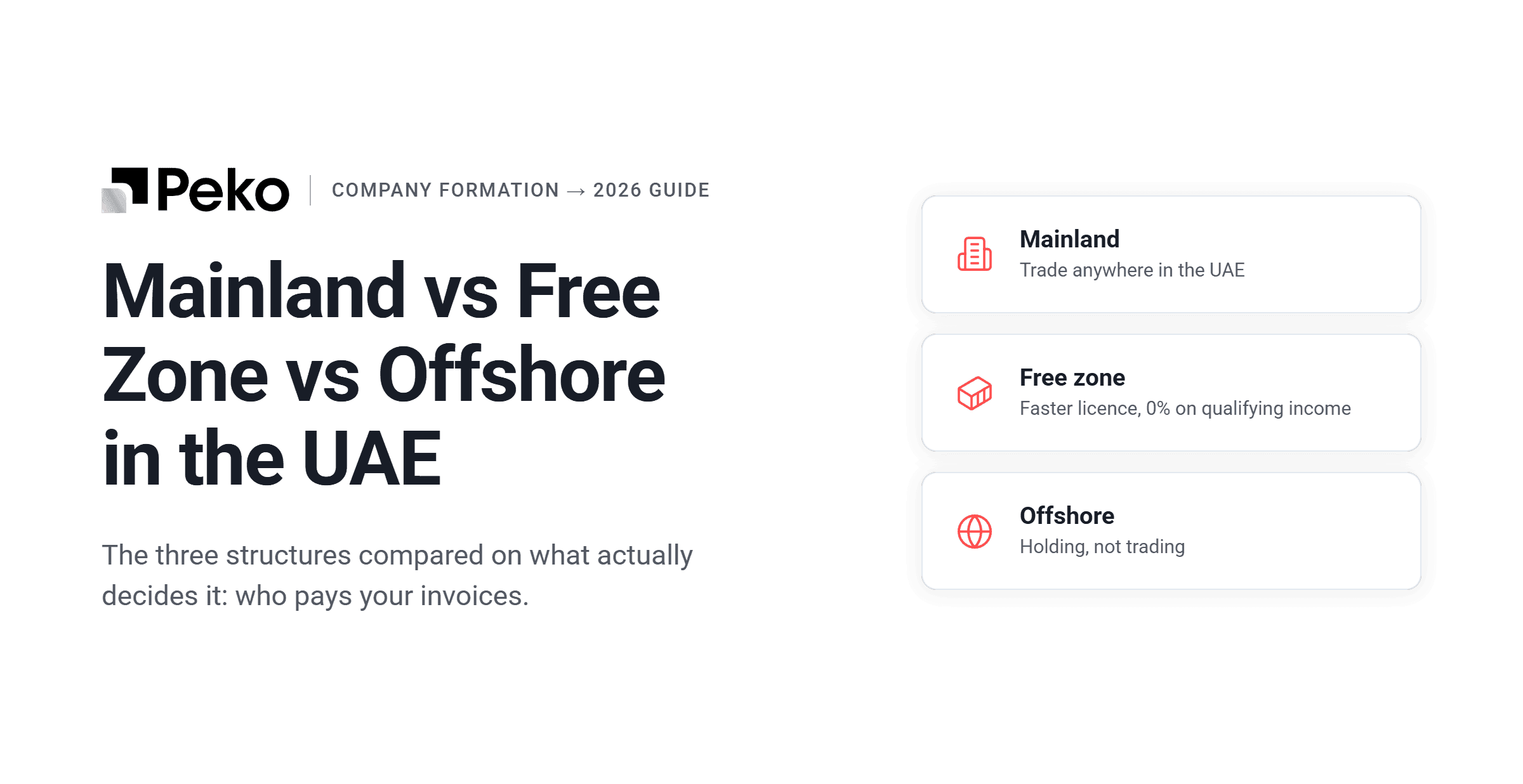
Dubai mainland company documents share the same core identification requirements as free zone setups but add three jurisdiction-specific items: a notarised Memorandum of Association, an Ejari-registered commercial lease, and for selected professional licenses, a Local Service Agent agreement. These extras exist because mainland companies operate under the Department of Economy and Tourism (DET) rather than a free zone authority, which means the licensing route runs through Dubai's commercial registration system. The table below highlights the practical differences founders see at submission stage.
What mainland adds on top of the standard document set. Three documents are unique to the Dubai mainland and frequently overlooked by first-time founders.
(1) The Ejari-registered office lease is mandatory and must be issued through the Dubai Land Department's Ejari portal; a virtual address or co-working desk will not pass DET review.
(2) The Memorandum of Association (MOA) must be notarised at the Dubai Courts (Notary Public) for LLC structures; standardised free-zone constitutional documents are not accepted in their place.
(3) A Local Service Agent (LSA) agreement is required for certain professional license categories where the activity falls outside the 100% foreign-ownership reform list. The LSA holds no equity but is the registered local representative. Founders setting up regulated activities (legal consultancy, certain advisory services) should confirm the LSA requirement with DET before drafting their MOA, as adding an LSA mid-application restarts notarisation.
Dubai Free Zone Company Documents - What's Different
Dubai free zone company documents look almost identical to mainland on paper, but diverge in three places: no notarised MOA is required, no Local Service Agent is needed, and physical office documentation is usually replaced by a flexi-desk or shared-office agreement. Each free zone - DMCC, DIFC, DAFZA, JAFZA, IFZA, Meydan, SHAMS - runs its own authority, its own application form, and its own document quirks, even though the core identification requirements are uniform. The trade-off founders accept in return for lighter documentation is a narrower trading scope inside the UAE mainland market.
Free-zone-specific documents to watch for. Most Dubai free zones replace the mainland's three jurisdiction-heavy documents with three lighter alternatives.
(1) A flexi-desk or shared-office agreement issued by the free zone itself replaces the Ejari lease; this is the single biggest reason free zone setup is faster and cheaper than mainland.
(2) A standardised constitutional document issued by the free zone replaces the notarised MOA, removing the trip to the Dubai Courts entirely.
(3) A zone-specific application form sits in place of the DET initial-approval certificate, and each zone designs its own - DMCC and DAFZA both require a 2–5 page business plan as part of this form, IFZA accepts a one-page activity declaration, JAFZA adds a trade-flow questionnaire for distribution-related activities. UAE residents transferring from another sponsor still need an NOC regardless of free zone choice, and corporate shareholders still need the full attested document chain. Confirm zone-specific add-ons with the authority before submission, every free zone publishes its own current document list, and they revise it 1–2 times per year.
Documents for Company Formation in Dubai for Foreigners (No Residency Required)
Foreign founders can register a Dubai company without holding UAE residency - the visa is issued after the trade license, not before it. The documents for company formation in Dubai for foreigners are the same core set (passport copy, photograph, trade name options, business activity, signed application) plus, in many cases, an additional attestation chain. Three things determine how heavy that extra paperwork is: your nationality, your free zone or mainland choice, and whether you can physically travel.
(1) Attestation requirements by country. Documents issued in countries that are signatories to the Hague Apostille Convention follow a lighter path, a single apostille from the home country's competent authority is sufficient. Documents from non-Hague countries follow the full chain: home-country notary → home-country Ministry of Foreign Affairs → UAE Embassy in the home country → UAE MOFA inside the UAE. Allow 2–4 weeks for the full chain, 5–10 working days for apostille. Confirm your country's status with the UAE Embassy or MOFA before drafting documents - the list updates as new countries accede.
(2) Digital copies and remote submission. Most Dubai free zones (DMCC, IFZA, Meydan, SHAMS) accept clear scanned copies for the initial application and trade license stage; originals are typically required only at the visa, Emirates ID, and bank-account-opening stages. Mainland setups under DET usually require physical originals at MOA notarisation. Always confirm the format your specific authority accepts before couriering anything.
(3) If the founder cannot travel. A Power of Attorney (POA) is the standard solution. The POA must be drafted by a UAE-licensed legal consultant, notarised in the founder's home country, attested or apostilled (per Step 1), and must specify exactly which actions the POA-holder is authorised to perform, sign the MOA, sign the Ejari lease, open the corporate bank account, and collect the trade license. Note that most UAE banks still require the founder's physical presence for KYC at account opening, even with a valid POA in place.
Corporate Shareholder Documents for a Dubai Company
If a company holds shares instead of an individual, additional documentation is required:
- Certificate of Incorporation
- Memorandum & Articles of Association
- Board Resolution approving investment
- Ultimate Beneficial Owner (UBO) declaration
- Notarized and attested copies (if foreign entity)
Attestation requirements depend on the country of origin.
Certificate of Incorporation in Dubai: What It Is and Who Issues It
A Certificate of Incorporation proves a company legally exists. In Dubai, it works differently from the UK or US, and it catches out founders and their banks in equal measure.
Who issues it. Free zones do: DMCC, DIFC, JAFZA, DAFZA, IFZA and Meydan all issue a Certificate of Incorporation alongside the trade license; some label it a Certificate of Formation or Certificate of Registration, and banks accept all three. Offshore registrars (JAFZA Offshore, RAK ICC, Ajman Offshore) always issue one. For mainland LLCs, the Department of Economy and Tourism does not issue a document under that exact title; your trade license together with the notarised Memorandum of Association performs the same function, and the DET Commercial Register entry is the official proof of existence.
When you will be asked for it:
- Opening a corporate bank account, particularly with an international or correspondent bank
- Registering a branch or subsidiary in another country
- Adding your Dubai entity as a corporate shareholder in a second UAE company
- Corporate tax registration for a group structure
- Enterprise customers running vendor due diligence before signing
How to get a copy. Free zone entities request a reissue through the zone's online portal — expect a nominal fee and 1–3 working days. Mainland companies request a Commercial Register extract from DET, which is what banks accept in place of a certificate. If the certificate was issued outside the UAE, it needs the full attestation chain (home-country notary → MOFA → UAE Embassy → UAE MOFA) before any UAE authority will accept it — see the attestation section above.
For how incorporation, formation and registration relate to each other, see our Dubai company formation guide.
⚠️ Verify before publishing: the claim that DET does not issue a document titled "Certificate of Incorporation" for mainland LLCs, and the free zone reissue fee/timeline. Peko Start's formation team can confirm both from live client files in minutes. If DET's practice has changed, adjust the paragraph, do not publish the claim unverified.
Special Regulatory Approvals & Sector-Specific Documents (Healthcare, Finance, Education)
Some industries require additional approvals before license issuance:
- Healthcare services
- Financial services
- Education institutions
- Legal consultancy
Failing to secure regulatory clearance leads to rejection.
Always confirm if your activity requires authority approval before submission.
The sector-specific approving authorities most founders need to plan for :
Common Documentation Mistakes That Delay Dubai Company Registration
Most delays stem from preventable issues:
- Passport validity under 6 months
- Incorrect business activity selection
- Trade name rejection
- Improper foreign document attestation
- Signature inconsistencies
Missing No Objection Certificate (NOC). A NOC is required when a UAE resident wants to hold shares in a new company, switch sponsors, or take on a directorship while still under their current visa. Without it, Dubai company formation is delayed by 5–10 working days on average. Clear the NOC with your current sponsor before submitting your trade-license application.
Pre-validating documents before submission significantly reduces authority rejections.
Structured document review, such as that included in Peko Start, helps minimise back-and-forth and processing delays.
How Long Does Dubai Company Formation Take?
If documentation is complete:
Dubai company formation takes 3 to 7 working days when documentation is complete and correctly submitted.
Free zone setups typically complete in 3–5 working days.
Mainland setups in 5–7.
Most delays: when they occur - come from trade-name rejection, missing attestations, or incorrect business activity selection rather than authority processing time.
Add 5–15 working days if foreign documents require attestation, or 2–4 weeks if you are setting up via a non-Hague-Apostille country. Offshore company formation typically takes 5–10 working days through a Registered Agent.
Post-License Requirements After Company Formation
Company formation is only the first step.
After trade license issuance, businesses may need:
- Corporate Tax registration
- VAT registration (if threshold met)
- Business bank account opening
- Visa file activation
- Labor file registration
Beyond formation, integrated SME platforms like Peko support accounting, payroll, invoicing, corporate tax compliance, and financial management within one ecosystem ensuring long-term operational stability.
Dubai Company Formation Cost Factors (2026)
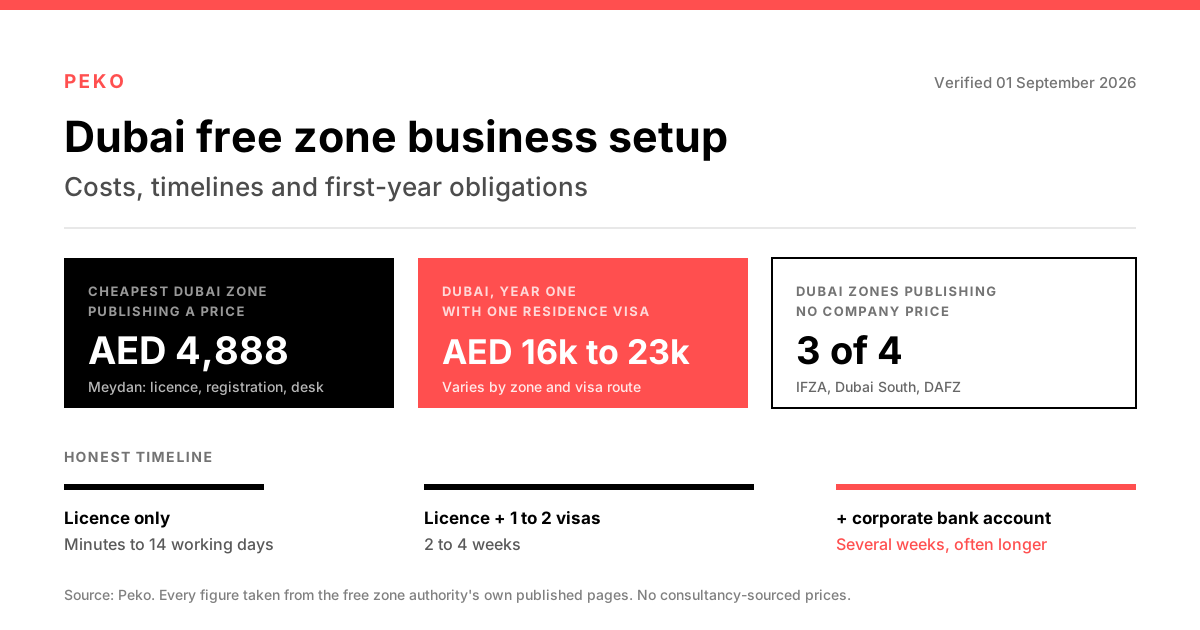
There is no single fixed price for Dubai company formation, the total depends on five variables: mainland vs free zone choice, free zone tier (budget vs premium), number of visas, office type (Ejari vs flexi-desk), and whether foreign documents require attestation. The 2026 cost ranges below reflect typical first-year setup costs in AED across the most common structures.
| Component | Range (AED) | Notes |
|---|---|---|
| Free zone setup — budget tier (e.g. IFZA, Meydan starter) | 11,500 – 18,000 | License + basic flexi-desk for year 1 |
| Free zone setup — premium tier (e.g. DMCC, DIFC) | 30,000 – 75,000+ | License + premium zone benefits + flexi |
| Mainland setup (LLC, no visas) | 18,000 – 35,000 | DET license + Initial Approval + MOA notarisation |
| Office — Ejari commercial lease (year 1) | 15,000 – 40,000 | Mainland minimum; varies by area |
| Office — Flexi-desk / shared (year 1) | 3,000 – 12,000 | Free zone option |
| Investor visa | 4,500 – 7,500 | Per shareholder/partner visa |
| Employee visa | 5,500 – 8,500 | Per employee |
| MOA notarisation (mainland) | 2,000 – 5,000 | Calculated as % of share capital |
| Document attestation (foreign docs) | 1,500 – 5,000 | Per document, full chain |
| Corporate Tax registration | Free (via FTA EmaraTax) | Advisor fees if outsourced: 1,000–3,000 |
| Bank account opening | Free – 5,000 | Some banks charge introduction fees |
Total typical year-1 cost for a single-shareholder, no-visa free zone setup: AED 11,500 – 25,000. Total typical year-1 cost for a 2-shareholder, 2-visa Dubai mainland LLC: AED 45,000 – 80,000.
Ongoing renewal costs from year 2 onward are typically 60–75% of year-1 setup - license renewal, Ejari renewal, visa renewals, but the front-loaded one-time costs (MOA, attestation, Initial Approval) do not repeat.
Start Your Company in Dubai with Confidence
Dubai continues to lead company formation in the UAE, but every Emirate now offers strong opportunities.
The process is structured.
The requirements are transparent.
The timelines are efficient.
But documentation accuracy determines approval speed.
If you are planning to register a company in Dubai or anywhere in the UAE, reviewing your documents before submission reduces delays and compliance risks.
Peko Start provides:
- End-to-end company formation support
- Trade license processing
- Visa & PRO services
- Corporate tax & VAT registration
- Bank coordination
- 1-year access to Peko’s integrated SME platform
- Starting a business in Dubai is straightforward.
- Submitting it correctly makes all the difference.
Frequently Asked Questions About Company Formation in Dubai & UAE
1. What documents are needed to open a company in Dubai?
To start a company in Dubai, you need passport copies of all shareholders, trade name approval, selected business activity, office address proof, and initial approval from the authority. Mainland companies also require a Memorandum of Association and a registered office (Ejari). Free zones may allow flexi-desk offices instead.
2. Can a foreigner open a company in Dubai without residency?
Yes, a foreigner can open a company in Dubai without residency. You only need a valid passport and business details to begin registration. Residency visa processing happens after the trade license is issued.
3. How long does it take to register a company in Dubai?
Company registration in Dubai usually takes 3 to 7 working days if all documents are complete and correctly submitted. Trade name reservation and initial approval are typically issued within 1 to 3 days.
4. Is a physical office required for company formation in Dubai?
A physical office is mandatory for mainland companies and must be registered under Ejari. Many free zones allow flexi-desk or shared office solutions instead of a full commercial lease.
5. What is the difference between mainland and free zone documentation?
The core documents are similar for both structures. However, mainland companies require a physical office and sometimes a local service agent for professional licenses. Free zones often allow flexible office options and do not require a local service agent.
6. What is a Memorandum of Association (MOA)?
A Memorandum of Association is a legal document that defines the ownership structure, share distribution, and partner roles in a company. It is required for mainland companies and outlines how the business is structured.
7. What happens if my trade name gets rejected?
If your trade name is rejected, you must submit alternative name options. Trade names are rejected if they duplicate existing companies or violate naming rules. Submitting multiple options reduces delays.
8. What is initial approval in Dubai company formation?
Initial approval is confirmation from the licensing authority that there is no objection to your business activity. It allows you to proceed with final license issuance.
9. Do I need additional approvals for certain business activities?
Yes. Regulated industries such as healthcare, financial services, education, and legal consultancy require additional approval from relevant authorities before license issuance.
10. Can I register a company remotely from outside the UAE?
Yes. Many free zones and mainland structures allow remote company registration. Physical presence is usually required later for visa processing and bank account opening.
11. What documents are required if a company is a shareholder?
If another company owns shares in your UAE business, you will need its Certificate of Incorporation, Memorandum and Articles of Association, Board Resolution, and attested documents confirming ownership structure.
12. What are the most common mistakes that delay company formation?
Common mistakes include passport validity under six months, incorrect business activity selection, trade name rejection, missing NOC, improper document attestation, and inconsistent signatures.
13. What happens after I receive my trade license?
After receiving your trade license, you may need to register for Corporate Tax, apply for VAT (if applicable), open a business bank account, activate visa files, and complete labor registrations.
14. Is company formation the same across all Emirates?
The documents required for company formation in the UAE are largely consistent across all seven Emirates - Dubai, Abu Dhabi, Sharjah, RAK, Ajman, Fujairah, and Umm Al Quwain. The main difference is the authority issuing the license and specific office requirements.
15. What determines the cost of company formation in Dubai?
The cost depends on whether you choose mainland or free zone, the number of visas required, office type, regulatory approvals, and document attestation needs. There is no single fixed cost for all businesses.
16. Do I need a Certificate of Incorporation for company incorporation in Dubai?
Only in specific cases. Where an individual is the shareholder of a mainland LLC, your trade license and notarised MOA are the proof of existence. You need a Certificate of Incorporation when another company holds shares in your Dubai entity; that parent company's certificate must be notarised and attested, or when you incorporate an offshore entity, where the registrar issues one directly.
Final Word: Documentation Decides Approval Speed
Key Takeaways
- Company formation in Dubai requires passport copies, trade name approval, business activity selection, office address proof, initial approval, and a Memorandum of Association for mainland setups.
- Mainland companies need an Ejari-registered office; free zones often accept flexi-desk solutions.
- Foreigners can register a Dubai company without UAE residency - visa processing follows trade-license issuance.
- Most companies are approved within 3–7 working days when documentation is accurate.
The documents required for company formation in Dubai are not complex, but they are unforgiving of error. Trade-name rejection, expired passports, mis-selected activity codes, and missing attestations are the four delays we see repeat across every Emirate. Get the paperwork right and Dubai issues licenses faster than almost any major economy in the world.
Peko-Company-Formation-Documents-Checklist-Dubai-UAE-2026.pdf
"Use the checklist above before submission; it removes 80% of avoidable delays."
Ready to start? Compare mainland vs free zone setup or review the complete Dubai formation cost guide. When you're ready to submit, Peko Start handles documentation, licensing, and visa coordination end-to-end.