- Blogs
- WPS Payroll and HR
- Payroll Automation for UAE & India SMEs: 2026 Guide
Jul 31, 2026
Payroll Automation for UAE & India SMEs: 2026 Guide
Share this article
- Payroll Automation for UAE & India SMEs: The Complete 2026 Guide
- What Payroll Automation Actually Means
- The Real Cost of Running Payroll by Hand in 2026
- How Payroll Automation Works, Step by Step
- UAE Payroll Automation: WPS 2.0, SIF Files, and Gratuity
- India Payroll Automation: PF, ESI, TDS, and the New Wage Code
- What to Actually Look For in Payroll Automation Software
- Which Industries and Audiences This Applies To
- How Peko Approaches Payroll Automation
- Frequently Asked Questions About Payroll Automation
- Final Thoughts
Payroll Automation for UAE & India SMEs: The Complete 2026 Guide
TL;DR:
- Payroll automation means software that calculates salaries, applies WPS or PF/ESI rules, generates compliance files, and pays employees with minimal manual input, not just a spreadsheet with formulas.
- In the UAE, WPS 2.0's real-time validation rejects a Salary Information File over a one-dirham mismatch, and since Ministerial Resolution No. 340 of 2026 there's no grace period left on the payment deadline either; in India, the Labour Codes' 50% basic-pay rule is being phased in state by state and will raise PF and gratuity costs wherever it lands.
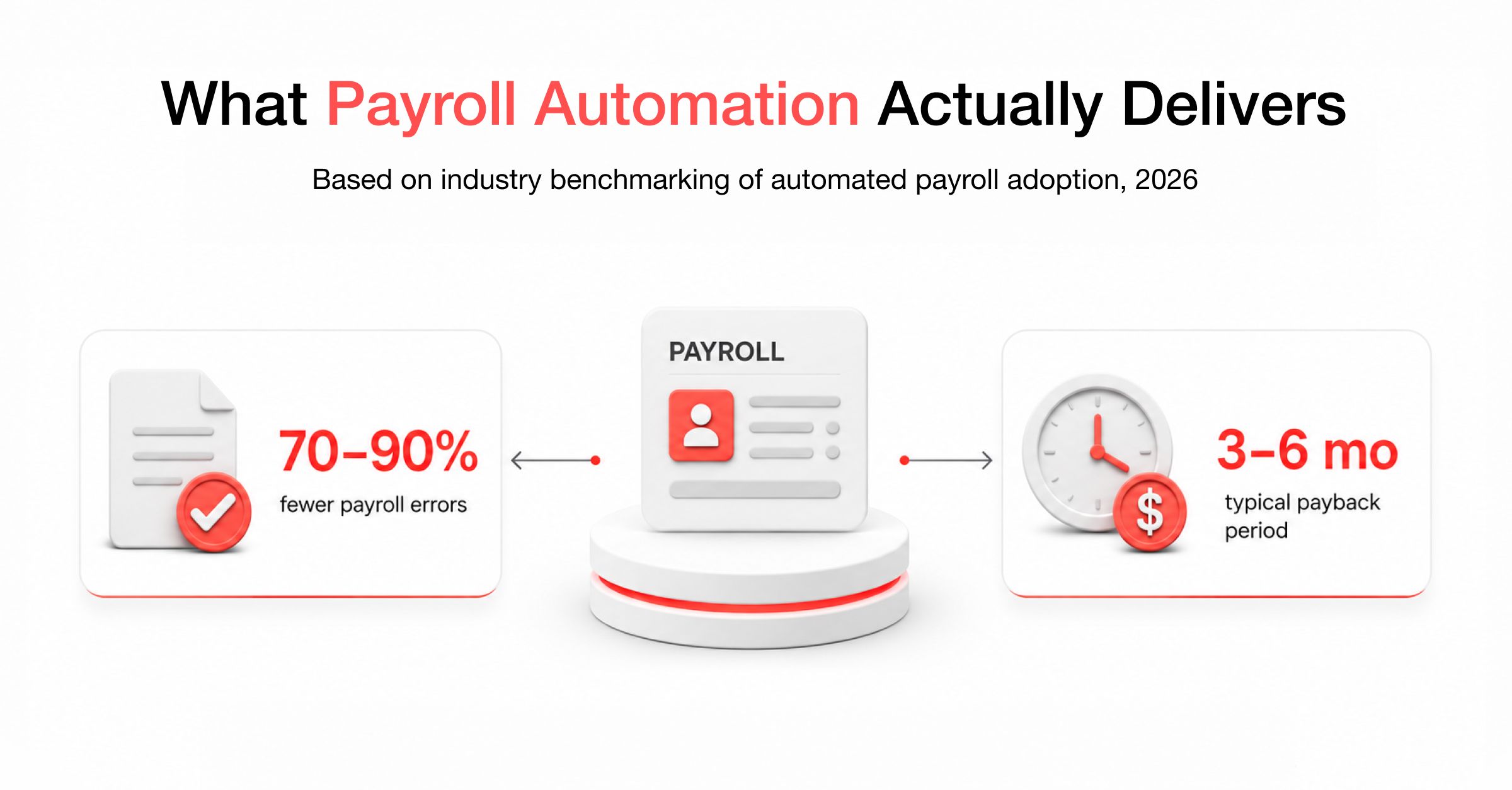
- Automated payroll cuts error rates by 70-90% and most SMEs see a return within 3-6 months, according to industry benchmarking.
- The right software for a 15-person company looks nothing like the right software for a 500-person one, and picking the wrong tier wastes both money and time.
Rahul runs a 22-person logistics brokerage with one office in Dubai and a small back-office team in Pune, and he still hasn't gotten around to payroll automation. Every month, on the 24th, his UAE accountant opens a spreadsheet that has been patched and re-patched since 2019, cross-checks overtime against a WhatsApp group where drivers report their hours, and manually types the numbers into a Salary Information File template. In January, a driver's basic salary in the spreadsheet was AED 1 off from what MoHRE had on record for his labour contract.
The file bounced with a few days to spare, which used to buy some breathing room. It doesn't anymore. Under the current rule, salaries for the previous month are due on the 1st, no grace period, so the fix had to happen overnight. Nothing catastrophic happened this time, just an automated alert. But Rahul now checks his phone every month-end with a knot in his stomach, because he knows the next rejection could freeze new work permits within days, and MoHRE's system doesn't wait for a story about why it happened.
Six thousand kilometres away, his Pune-based operations lead runs into a version of the same problem with a different acronym. She calculates provident fund and ESI contributions in Excel, cross-references thresholds that change with every notification, and hopes she catches an eligibility change before the filing deadline. Neither of them set out to be payroll experts. They set out to run a logistics business. That gap, between what founders actually want to do and what compliance now demands of them, is exactly what payroll automation exists to close.
What Payroll Automation Actually Means
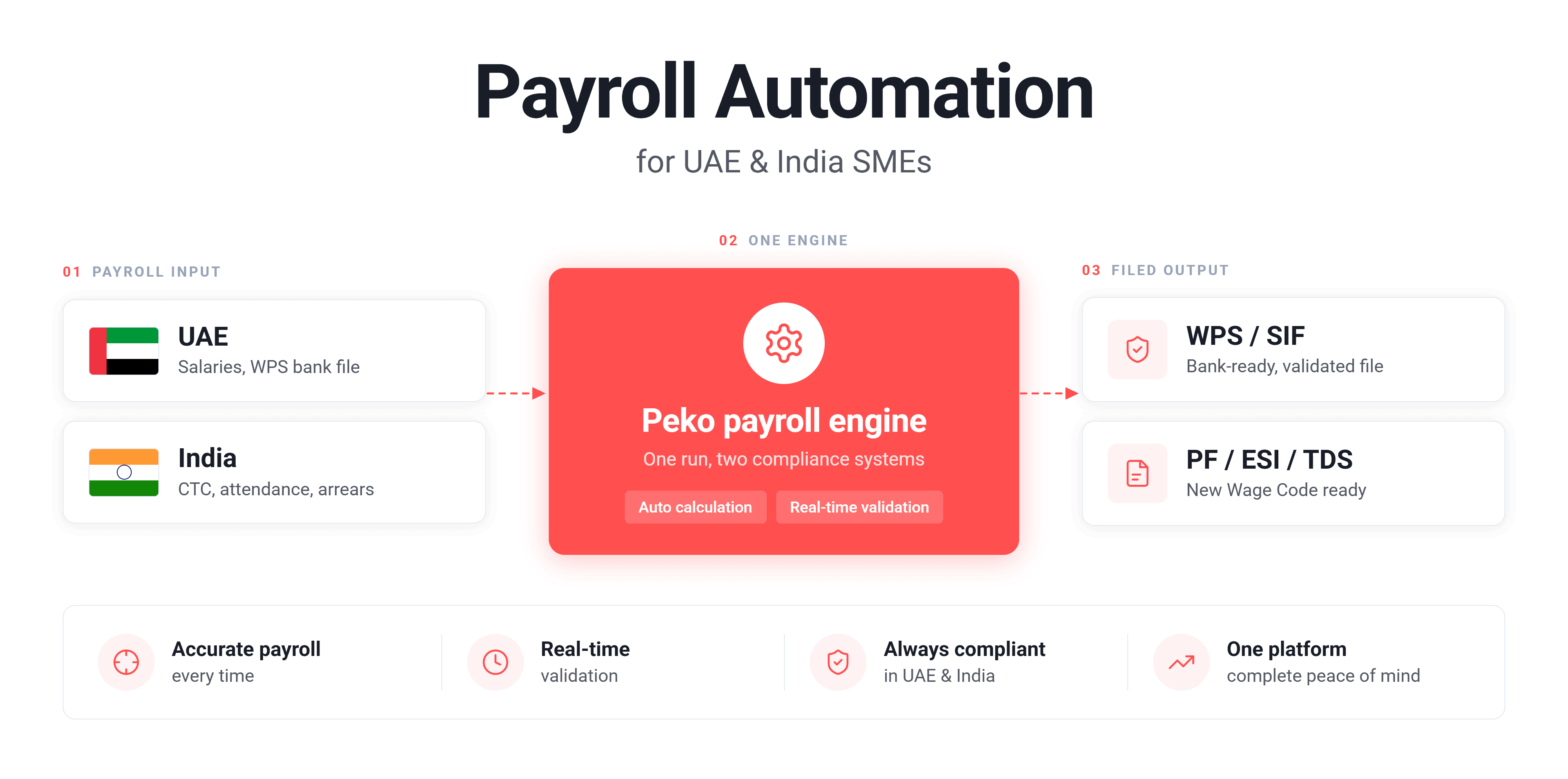
Payroll automation is software that takes over the repeatable parts of running payroll, calculating pay, applying statutory rules, generating compliance files, and disbursing salaries, so a human only reviews and approves rather than builds the numbers from scratch each month.
That's a narrower claim than it sounds. A spreadsheet with formulas is not payroll automation; it still requires someone to manually pull attendance data, retype bank details, and remember which deduction code applies to unpaid leave. True automation connects attendance, leave, and salary structure into one system, then applies the UAE's WPS rules or India's PF/ESI/TDS rules automatically, catching errors before submission instead of after a rejection notice.
The distinction matters because plenty of "payroll software" on the market is really just a faster spreadsheet with a login screen, and it will fail the same way a spreadsheet does the moment WPS 2.0 or the New Wage Code changes the rules underneath it.
The Real Cost of Running Payroll by Hand in 2026
Manual payroll now carries a measurable, and growing, financial and legal cost in both the UAE and India, not just an inconvenience cost.
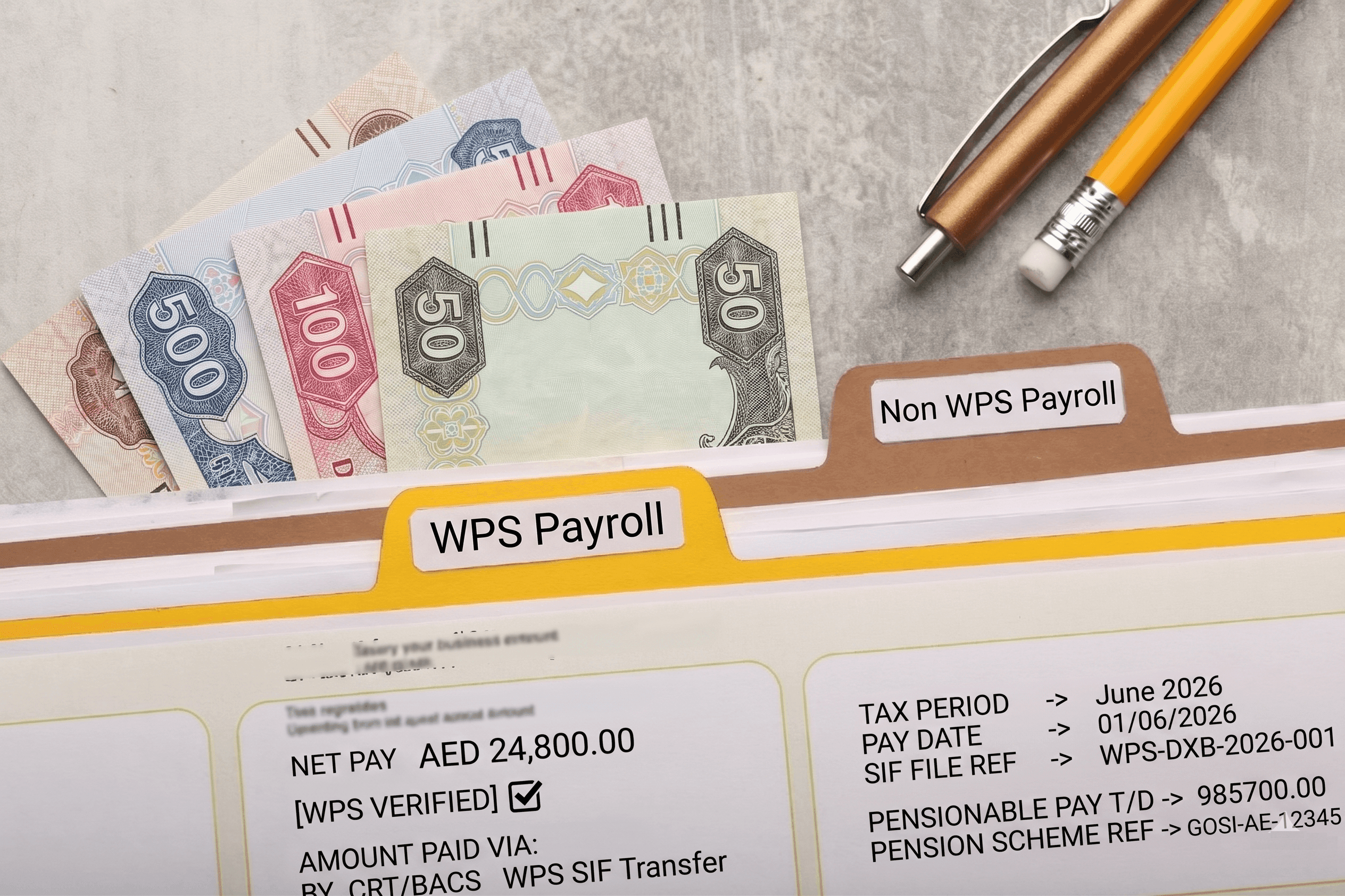
On the UAE side, WPS 2.0 turned what used to be a monthly batch check into instant validation, and Ministerial Resolution No. 340 of 2026, effective 1 June 2026, rewrote the payment deadline on top of it. Every Salary Information File is checked the moment it's submitted against the labour contract MoHRE holds on file, and a mismatch as small as one dirham triggers rejection before the file reaches the bank.
The old 15-day grace period is gone: salaries for the previous month are now due on the 1st of each Gregorian month, and an establishment only counts as compliant if at least 85% of total wages due have cleared on time. Miss that, and the timeline moves fast, alerts go out from day 2, new work permits get suspended from day 5, fines and a compliance-category downgrade followed by day 11 for repeat violations, and businesses with 25 or more affected workers face automatic labour dispute registration by day 16, with asset attachment and prosecution referral possible by day 21. None of this requires an inspector to notice; the system flags it automatically.
India's compliance load is rising in a quieter but no less expensive way. The four Labour Codes were first notified in November 2025, and the central government issued the consolidated Central Rules on 8 May 2026, later than the April 2026 target most employers had planned around. More than 30 states and union territories have since notified rules for at least one code, but coverage is uneven, Maharashtra, Gujarat, and Karnataka are furthest along, while others have only partially notified, and as of mid-2026 no uniform, pan-India commencement date has been announced.
Rules notified is not the same as rules in force. Buried inside those Codes is a rule that basic pay must equal at least 50% of total CTC, a threshold plenty of Indian employers have historically undercut by keeping basic pay closer to 30-40% of CTC specifically to reduce PF and gratuity contributions. That workaround closes the moment a state actually commences its rules, and industry estimates put the resulting increase in statutory costs at 5-15% for affected employers, with take-home pay shifting by 2-7% in the other direction.
A payroll process built on a single national assumption will get the math wrong the moment one state commences its rules while a neighbouring one hasn't, and most Indian payroll teams don't have a system that tracks that state by state.
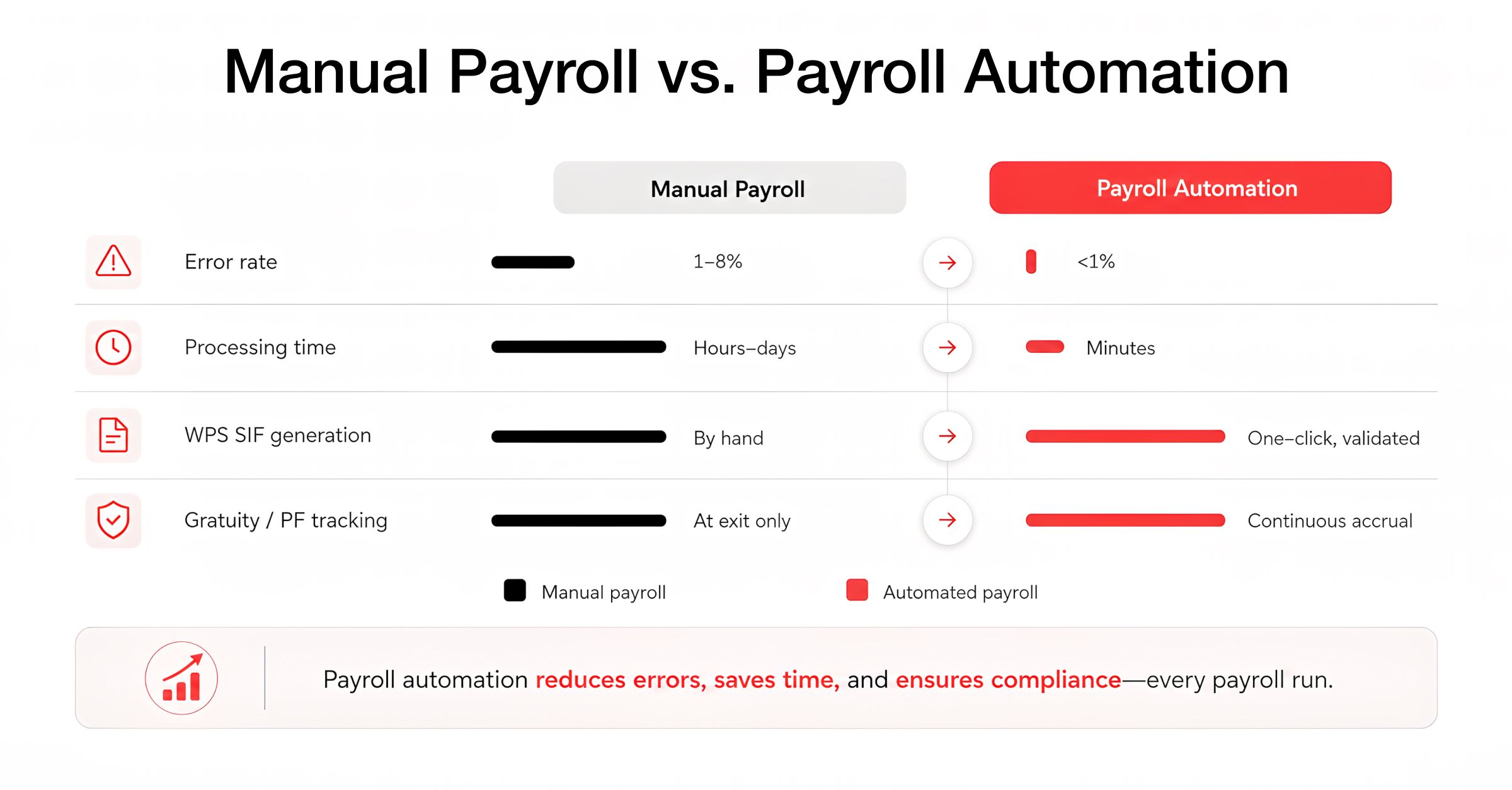
Set against that backdrop, the numbers on automation's payoff are hard to ignore. Industry bench-marking on automated payroll consistently shows error rates dropping by 70-90% compared to manual processing, and most organisations report a measurable return within three to six months of full deployment. That's not a hypothetical efficiency gain; it's the difference between catching a mismatch before submission and finding out about it from a MoHRE rejection notice or a PF department query.
How Payroll Automation Works, Step by Step
A working payroll automation setup follows a consistent sequence, regardless of which country's rules it's built to satisfy.
- Centralise employee data once. Salary structure, bank details, labour contract terms, and tax or PF identifiers live in one record instead of being re-typed every cycle.
- Pull in attendance and leave automatically. Overtime, unpaid leave, and absences feed straight from a biometric device, app, or roster instead of being manually reconciled against a spreadsheet.
- Run the calculation engine. Gross pay, statutory deductions (WPS-relevant components in the UAE; PF, ESI, and TDS in India), and employer contributions are computed from configured rules, not rebuilt from scratch.
- Validate before submission. The system checks IBANs, contract salary matches, and deduction codes internally, catching the kind of one-dirham mismatch that would otherwise bounce a SIF file.
- Generate the compliance file. A WPS-ready SIF file or an India-ready PF/ESI/TDS filing is produced in the correct format automatically, rather than assembled by hand against a naming convention nobody enjoys memorising.
- Disburse and record. Salaries move through approved banking channels, and the system logs an audit trail that HR, finance, and any future inspector can pull up without a scramble.
- Issue payslips and reports. Employees get self-service access to payslips; finance gets salary registers, cost-centre breakdowns, and year-end reports without rebuilding them manually.
Each step removes one specific point where manual entry used to introduce risk, which is why the cumulative effect on error rates is so much larger than automating any single step in isolation.
UAE Payroll Automation: WPS 2.0, SIF Files, and Gratuity
Payroll automation in the UAE has to be built around WPS 2.0's real-time architecture and the payment rules under Ministerial Resolution No. 340 of 2026, not layered on top of them as an afterthought.
Since MoHRE's December 2025 upgrade, every SIF submission is validated instantly against the Unified Labour Contract, checking IBAN format, Labour ID, and basic salary down to the dirham. Automation software worth using generates that file directly from payroll data, validates the internal checksum (the SCR, or Salary Control Record, must match the sum of every employee record exactly), and flags problems before export rather than after a rejection email. It also needs to track the current deadline structure directly: wages are due on the 1st of each month with no grace period, and the software should be watching the 85% compliance threshold in real time rather than leaving finance to find out from a MoHRE notice.
On top of that, it needs to track gratuity continuously rather than calculating it only when someone resigns, since a salary change months earlier that wasn't reflected in the accrual creates a costly surprise at the final settlement.
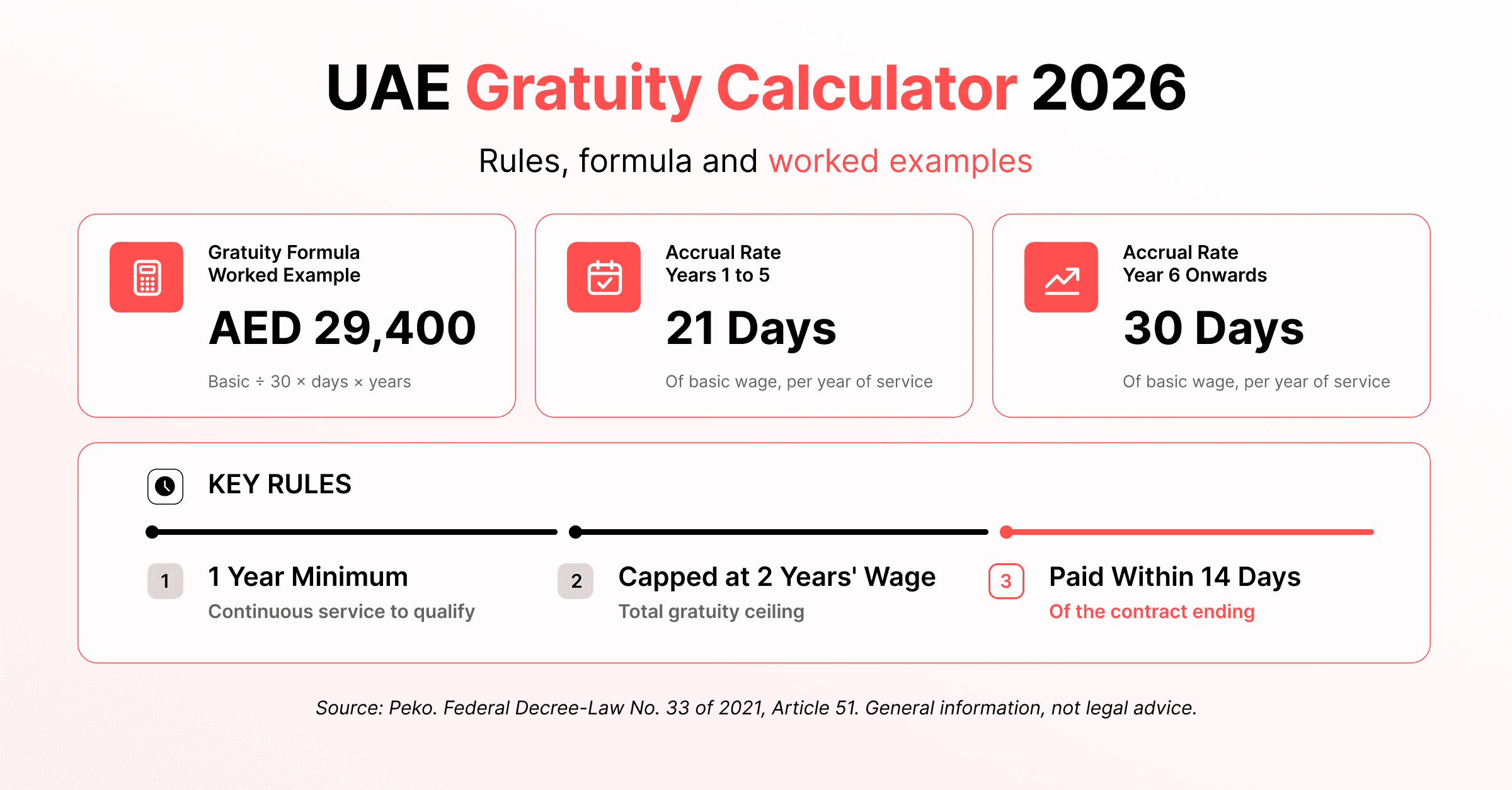
Businesses paying UAE nationals also need the system to check the AED 6,000 minimum wage floor automatically; the transition period for existing contracts ended on 30 June 2026, and enforcement, exclusion from Emiratisation quota calculations and a freeze on new work permits for underpaid staff, has been active since 1 July. For the fuller rulebook on penalties, SIF formatting, and the Emiratisation wage floor, Peko's UAE WPS Compliance Guide 2026 walks through the current penalty matrix in detail, and the WPS vs non-WPS salary guide covers which arrangements are actually legal under WPS 2.0.
A lot of payroll guidance still circulating online describes the pre-2026 penalty structure, so it's worth being explicit about what actually changed:
India Payroll Automation: PF, ESI, TDS, and the New Wage Code
Indian payroll automation carries a different kind of complexity: fewer real-time rejections, more moving statutory thresholds that change based on wage codes, state-by-state commencement, and employee eligibility.
A properly automated system determines PF and ESI eligibility per employee automatically (ESI, for instance, applies below a defined wage ceiling that shifts periodically), calculates employer and employee contributions during the pay run itself rather than in a side calculation, and keeps TDS withholding current against the applicable slab.
The bigger structural challenge through 2026 is the Labour Codes' 50% basic-pay rule: automation should recalculate the wage split automatically and surface the resulting PF and gratuity cost increase to finance before it shows up as a surprise on the P&L, rather than being discovered during a year-end audit. Because labour falls under India's Concurrent List, each state is commencing its rules on its own timeline, some are well ahead and others haven't notified rules for every code yet, so a payroll system serving employees across multiple states genuinely needs state-aware rule configuration rather than a single national assumption.
Treating "the Labour Codes" as one switch that flips nationwide on a single date is the most common planning mistake right now.
What to Actually Look For in Payroll Automation Software
Not every payroll platform sold as "automated" actually removes manual work; some just move the same manual steps into a nicer interface.
A quick gut check when evaluating a vendor: ask what happens the month a rule changes, whether it's the AED 6,000 Emirati wage floor or a state's New Wage Code notification. If the answer involves someone manually reconfiguring a spreadsheet, it isn't really automation yet.
Which Industries and Audiences This Applies To
Payroll automation earns its keep fastest in businesses where headcount, shift patterns, or compliance complexity outpace what a spreadsheet can safely handle.
In the UAE, that includes hospitality and restaurant groups running hourly, shift-based staff across multiple outlets; construction and contracting firms managing day-rate labourers where WPS exposure is highest; logistics and trucking operators like Rahul's, where overtime and route-based pay vary constantly; retail chains with several branches and frequent staff turnover; and e-commerce or D2C brands scaling headcount quickly enough that manual payroll becomes a bottleneck within a year or two.
In India, the clearest fits are IT and ITES/BPO firms with large headcounts and heavy PF/ESI administration, manufacturing units running shift-based wages that the New Wage Code's basic-pay rule directly affects, retail and quick-commerce operators with high staff churn, and healthcare or logistics staffing firms managing contract labour across multiple states. A specific and growing segment for Peko: founders running a UAE entity and an India back-office or subsidiary side by side, who need one coherent view of payroll cost and compliance across both markets instead of two disconnected spreadsheets that never quite reconcile.
How Peko Approaches Payroll Automation
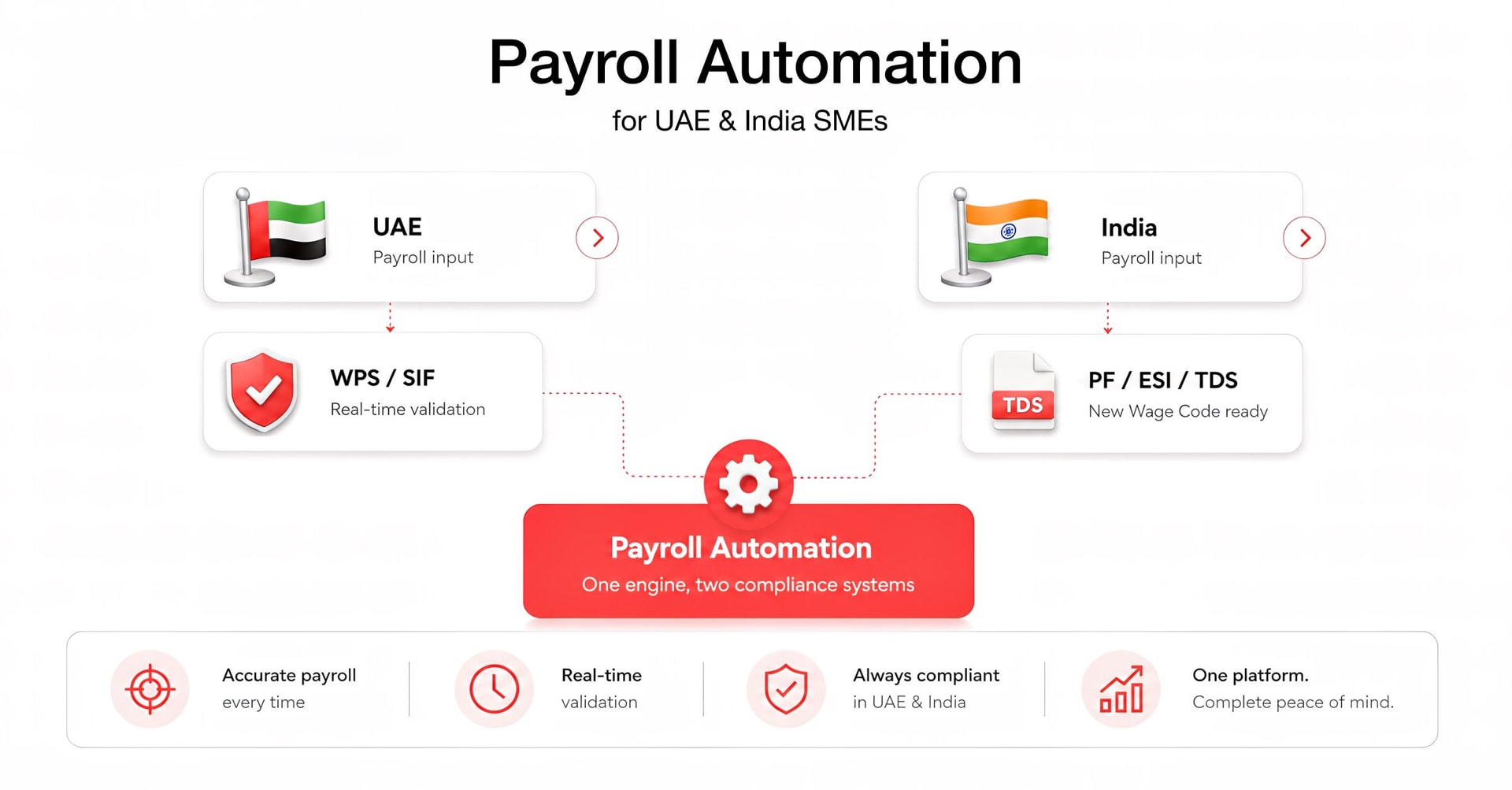
Peko's payroll and HR module is built around the same principle running through this guide: centralise employee and salary data once, connect it to attendance and leave, and let the system generate WPS-ready SIF files and payslips without a manual rebuild every cycle. Because Peko is also an accounting and payments platform, payroll data flows into the same ledger used for accounting and corporate card spend, so a founder like Rahul isn't reconciling payroll against three separate systems at month-end. It won't remove every judgment call a founder needs to make about compensation, but it removes the manual re-entry and formatting risk that turns a routine payday into a stressful one.
Frequently Asked Questions About Payroll Automation
What is payroll automation and how is it different from regular payroll software?
Payroll automation refers to software that calculates pay, applies statutory rules like WPS or PF/ESI, generates compliance files, and disburses salaries with minimal manual re-entry. Regular "payroll software" sometimes just digitises a spreadsheet without actually connecting attendance, compliance validation, and disbursement into one automated flow.
How does payroll automation work with the UAE's WPS system?
Payroll automation generates the Salary Information File directly from payroll data, validates IBANs and contract salary matches internally, and checks that the SCR total matches the sum of employee records before submission, catching the kind of mismatch that causes WPS 2.0 rejections.
Can payroll automation handle India's PF, ESI, and TDS compliance automatically?
Yes, a properly built system determines PF and ESI eligibility per employee, calculates employer and employee contributions during the pay run, and applies current TDS slabs, though multi-state businesses need software that supports state-specific rule variations, since the Labour Codes are commencing state by state rather than on one nationwide date.
How much time and money does payroll automation actually save a small business?
Industry benchmarking shows automated payroll reduces error rates by 70-90% compared to manual processing, and most organizations see a measurable return within three to six months, largely from fewer corrections, faster processing, and reduced compliance risk.
What happens if a WPS SIF file has an error even with automation in place?
A well-built automation system validates the file before submission and flags mismatches, such as an incorrect IBAN or a salary figure that doesn't match MoHRE's record, so the error can be fixed before the file is rejected rather than after a payment delay.
Is payroll automation worth it for a business with fewer than 20 employees?
It's usually worth it once payroll variables (shifts, overtime, multiple pay components, or cross-border entities) exceed what one person can safely track by hand, which for many SMEs happens well before headcount reaches 20, particularly under WPS 2.0's real-time validation.
Final Thoughts
Payroll automation stopped being a "nice to have" the moment WPS 2.0 started validating salary files in real time and India's New Wage Code started rewriting what basic pay has to mean. Neither Rahul nor his Pune-based operations lead chose to become compliance specialists; the rules changed underneath them, and the businesses that adapt fastest are the ones that stop treating payroll as a monthly fire drill. The honest advice here isn't to buy the most feature-loaded platform on the market. It's to buy the one that actually matches your headcount, your markets, and the specific rules you're exposed to, and to test it against a real payroll cycle before trusting it with a live one. If you're running payroll across the UAE and India and still doing the reconciliation in your head every month-end, that's usually the clearest sign it's time to stop.