- Blogs
- Peko Start
- UAE Employee Visa & Business License Guide (2026)
Dec 31, 2025
UAE Employee Visa & Business License Guide (2026)
Share this article
- Employee Visa UAE, Business License and Workplace Setup Guide for New Companies (2026)
- Which Business License Actually Matches What You'll Be Doing
- Getting Your Establishment Card and Sponsoring Your First Employees
- Setting Up a Workplace That Actually Satisfies Your License
- Which Businesses This Applies To
- Frequently Asked Questions About UAE Employee Visa & Business License Guide
- Final Thoughts
Employee Visa UAE, Business License and Workplace Setup Guide for New Companies (2026)
TL;DR:
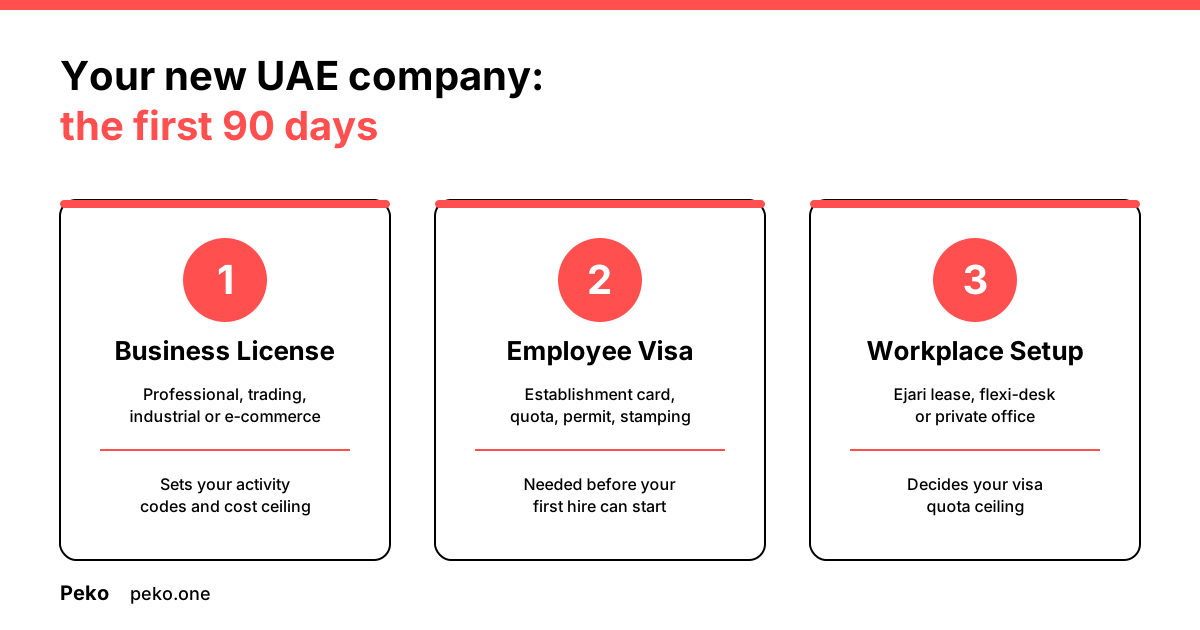
- Your certificate of incorporation is not a license to operate. You still need the right trade license activity codes, an active MOHRE establishment card before you can sponsor anyone, and a compliant address before most authorities will process either.
- Mainland companies need an Ejari-registered physical office (roughly 200 sq ft minimum); most free zones let you start on a flexi-desk, which typically unlocks 1 to 3 visas.
- An employee visa in the UAE moves through four gates in order: establishment card, visa quota approval, work permit, then entry permit or in-country status change, before Emirates ID and stamping.
- Budget AED 5,000 to 15,000 per employee for a full visa cycle (permit, medical, Emirates ID, stamping) on top of your license and office costs.
So you've got the certificate of incorporation. The bank account might still be four weeks out, but the company legally exists. Then the questions start landing at once: which license actually lets you invoice clients, where does the employee visa UAE process even start, and does a shared desk in a business centre actually count as an office? None of that gets covered in the Company Formation Paperwork, and getting the order wrong (renting an office before confirming your license activity, say, or trying to sponsor a visa before the establishment card is active) costs weeks and, occasionally, a re-do fee.
This guide picks up exactly where company formation ends: the license decision, the visa mechanics, and the workplace setup that both of those depend on.
Which Business License Actually Matches What You'll Be Doing
A trade license only covers the activities named on it, so the license type has to match your revenue model before you sign anything, not after.
Dubai's Department of Economy and Tourism (DET) and the free zone authorities issue five license families that cover almost every new company: professional, commercial (trading), industrial, e-commerce, and freelance. Pick the wrong one, and you'll be filing an activity amendment (and paying for it again) within the first year.
Professional license. Built for skilled-service businesses, consultants, accountants, engineers, marketing agencies, IT firms. The advantage that pulls most solo founders and small teams toward it: 100% foreign ownership without a local Emirati sponsor, and it's usually the cheapest of the five to run.
Commercial (trading) license. For anyone buying, selling, or importing physical goods. A DET mainland general trading license, which covers the widest range of tradeable goods, runs AED 15,000 to 25,000 a year in government fees alone, more than a standard single-activity commercial license because of that broader scope.
Industrial license. Needed for manufacturing, processing, or assembly. It requires sign-off from both the emirate's economic department and the Ministry of Industry and Advanced Technology, so build in extra approval time.
E-commerce and freelance licenses. Aimed at solo operators and online-only sellers; several free zones (and DET's e-trader scheme) issue these at a lower cost than a full trading license, though they usually cap you to specific activities and a smaller visa allowance.
First-year setup costs, including the license, registration, and a starter visa package, typically land between AED 25,000 and 60,000 before you add a premium office or extra visas. Mainland gives you unrestricted access to the local UAE market; a free zone license generally restricts direct mainland trade unless you route through a distributor or hold a dual license. If you haven't settled that trade-off yet, it's worth working through the full breakdown in our mainland vs. free zone comparison before you commit to either path, since switching later means a fresh license application, not an amendment.
Getting Your Establishment Card and Sponsoring Your First Employees
You cannot legally hire anyone, not even yourself as a shareholder-employee, until your company has an active establishment card and a matching visa quota.
Two separate government files open the moment your license is issued: an immigration file with the Federal Authority for Identity, Citizenship, Customs & Port Security (ICP) or your local GDRFA, and a labour file with the Ministry of Human Resources and Emiratisation (MOHRE). The MOHRE establishment card is the one that actually authorizes you to register employment contracts and request work permits, so nothing on the hiring side moves before it's active.
Once that card is live, sponsoring an employee runs through four stages, in this order:
- Visa quota approval. MOHRE approves how many work permits your company can hold, based on your license category and, in most cases, your registered office space.
- Work permit application. Filed through the MOHRE portal once the candidate has accepted an offer.
- Entry permit or status change. New hires arriving from abroad get an entry permit; candidates already inside the UAE (on a visit visa or transferring employers) go through an in-country status change instead, which skips the entry permit fee entirely.
- Medical test, Emirates ID, and visa stamping. The final steps once the employee is physically in the country on the right permit.
What it costs. Labour card fees range from roughly AED 250 for a Category 1 employer up to AED 3,450 for Category 3, plus a AED 50 work permit application fee and about AED 72 in service centre charges. Add the entry permit (AED 200-440, skipped for in-country status changes), medical testing, and Emirates ID issuance, and a realistic all-in figure per employee sits between AED 5,000 and 15,000 depending on category and nationality.
Visa quota isn't a fixed number per license type, it scales with your office. Free zone flexi-desk packages commonly allow 1 to 3 visas at entry level; mainland and larger free zone offices are usually calculated at around one visa per 9 square metres of registered space. Need more headroom than your current package allows? Most authorities let you apply for a quota increase, it just means upgrading the office registration first.
Setting Up a Workplace That Actually Satisfies Your License
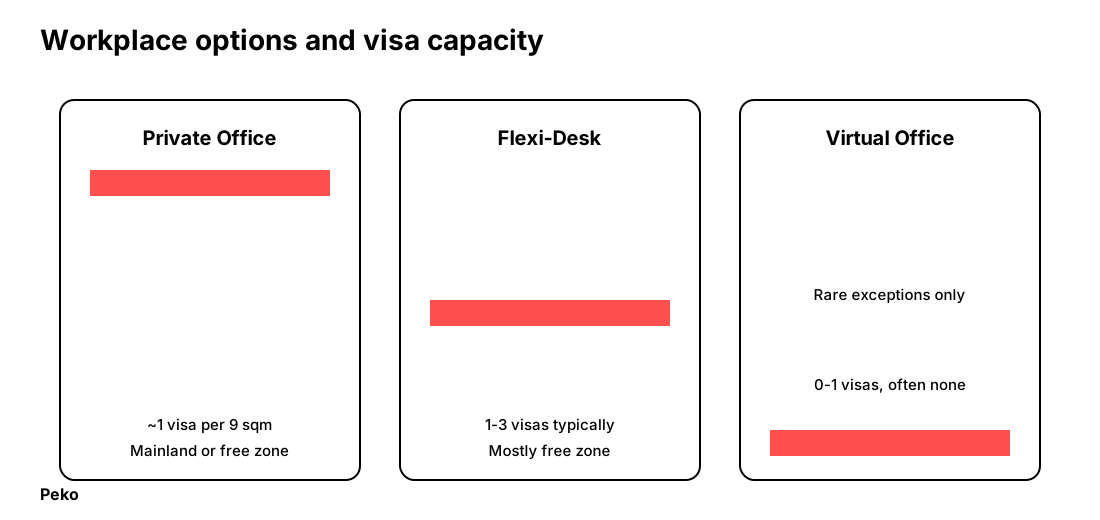
Your license type decides whether "an office" means a full lease, a flexi-desk, or isn't required at all, and getting this wrong is the single most common reason a mainland license gets stuck at the final approval step.
Mainland companies need Ejari, Dubai's official tenancy registration system, before the trade license can be issued, and a real lease behind it. The Ministry of Economy's own guidance is explicit that businesses need an actual address with a lease contract, not a mailing address. Minimum registered space typically runs around 200 sq ft (about 20 sqm), though this shifts by emirate and activity.
Free zones work differently. Most offer a flexi-desk model: a shared, authority-approved desk that still carries a real Ejari-equivalent lease under your company name, just at a fraction of a private office's cost. What gets marketed online as a pure "virtual office" (an address with no desk, no lease) is usually not sufficient on its own for a mainland license, and even in free zones it typically caps your visa quota lower than a flexi-desk would.
If a shared workspace or coworking membership is what you're eyeing, confirm with the provider that they issue an Ejari (or the free zone's equivalent lease certificate) in your company's name specifically, not just a shared building address, before you count on it for either your license renewal or your visa quota.
Which Businesses This Applies To
This sequence, license activity, establishment card, workplace, matters most to founders who are hiring within the first year, not solo consultants running a single-visa freelance setup.
Retail and trading businesses feel it first because their commercial license activity directly determines what they can legally import or sell, and any mismatch shows up at customs before it shows up anywhere else. Professional services firms, consultancies, marketing and IT agencies, hit the visa-quota wall earliest, since their growth is headcount-driven and a flexi-desk quota of one or two visas runs out fast.
E-commerce and D2C sellers often start on a free zone e-commerce license specifically because it pairs a lower entry cost with a workplace setup that doesn't require a public-facing storefront. Manufacturing and logistics operators, meanwhile, are the group most exposed to the industrial-license approval timeline, since dual sign-off from the economic department and the Ministry of Industry routinely adds weeks that other business types don't face.
Frequently Asked Questions About UAE Employee Visa & Business License Guide
How do I get an employee visa in the UAE for a newly formed company?
Your company first needs an active MOHRE establishment card and immigration file, opened right after your trade license is issued. From there, you apply for visa quota approval, then a work permit, then either an entry permit (for candidates abroad) or an in-country status change, followed by medical testing, Emirates ID, and visa stamping.
What business license do I need to start operating in Dubai?
It depends on what you actually do: a professional license for skilled services, a commercial/trading license for buying and selling goods, an industrial license for manufacturing, or an e-commerce/freelance license for solo and online-only operators. The activities listed on the license are the only ones you're legally permitted to invoice for.
Do I need a physical office for a UAE mainland trade license?
Yes. Mainland licenses require an Ejari-registered lease for a real address, typically a minimum of around 200 sq ft, before DET will issue the license. A mailing address or pure virtual office isn't sufficient for mainland.
How many employee visas can my UAE company sponsor?
It's tied to your registered office space and license package rather than a flat number. Flexi-desk packages commonly allow 1 to 3 visas; larger offices are calculated at roughly one visa per 9 square metres. You can apply for a quota increase once your office registration supports it.
How much does an employee visa cost in the UAE in 2026?
Budget roughly AED 5,000 to 15,000 per employee end-to-end: the labour card fee (AED 250-3,450 by employer category), an AED 50 work permit fee plus service charges, an entry permit if the hire is coming from abroad (AED 200-440), and medical testing plus Emirates ID issuance.
Can I use a virtual office for my UAE free zone company?
Some free zones allow it for specific license types, but it usually caps your visa quota at zero or one and won't satisfy a mainland license at all. A flexi-desk, which carries an authority-issued lease in your company's name, is the safer default if you plan to sponsor even one employee.
Final Thoughts
Most of the friction in this stage isn't the paperwork itself, it's sequencing. Founders who lease an office before locking the license activity, or who try to push a visa application before the establishment card clears, end up paying for the same step twice. Get the license activity right first, since it dictates both your workplace requirement and your visa quota ceiling; everything downstream follows from that one decision. Once your first hire is stamped in, the next problem is usually payroll and WPS compliance, worth reading up on before your first pay run rather than after.